
Quick answer
Knee pain without a clear injury can be related to osteoarthritis, patellofemoral pain, tendon irritation, bursitis, inflammatory arthritis, gout, a Baker’s cyst or a change in activity and loading. The location of pain, swelling, stiffness and what makes it worse can help guide an assessment, but symptoms alone cannot confirm the cause.
If your knee pain is severe, the joint is hot and red, you have fever, or you cannot bear weight, seek urgent medical assessment rather than trying to manage it with exercises alone.
Why does my knee hurt if I have not injured it?
Not all knee pain starts with a fall, twist or sports injury. Symptoms can build gradually as the knee responds to repeated loading, age-related joint changes, inflammation or a condition that affects the tissues around the joint. Sometimes a person cannot identify one specific event that started the pain.
Pain when walking, climbing stairs, squatting or getting up from a chair may have several possible explanations. A swollen knee, prolonged morning stiffness, a lump behind the knee or a suddenly hot and painful joint may point to different problems and should be assessed appropriately.
The causes below are possibilities—not a diagnosis. A clinician considers your symptoms, medical history and examination findings together.
8 possible causes of knee pain without injury
1. Osteoarthritis
Osteoarthritis is a joint condition involving changes to cartilage and other joint structures. It may cause pain during weight-bearing activity, stiffness after rest, reduced movement or swelling. Symptoms often develop gradually, but the pattern varies from person to person.
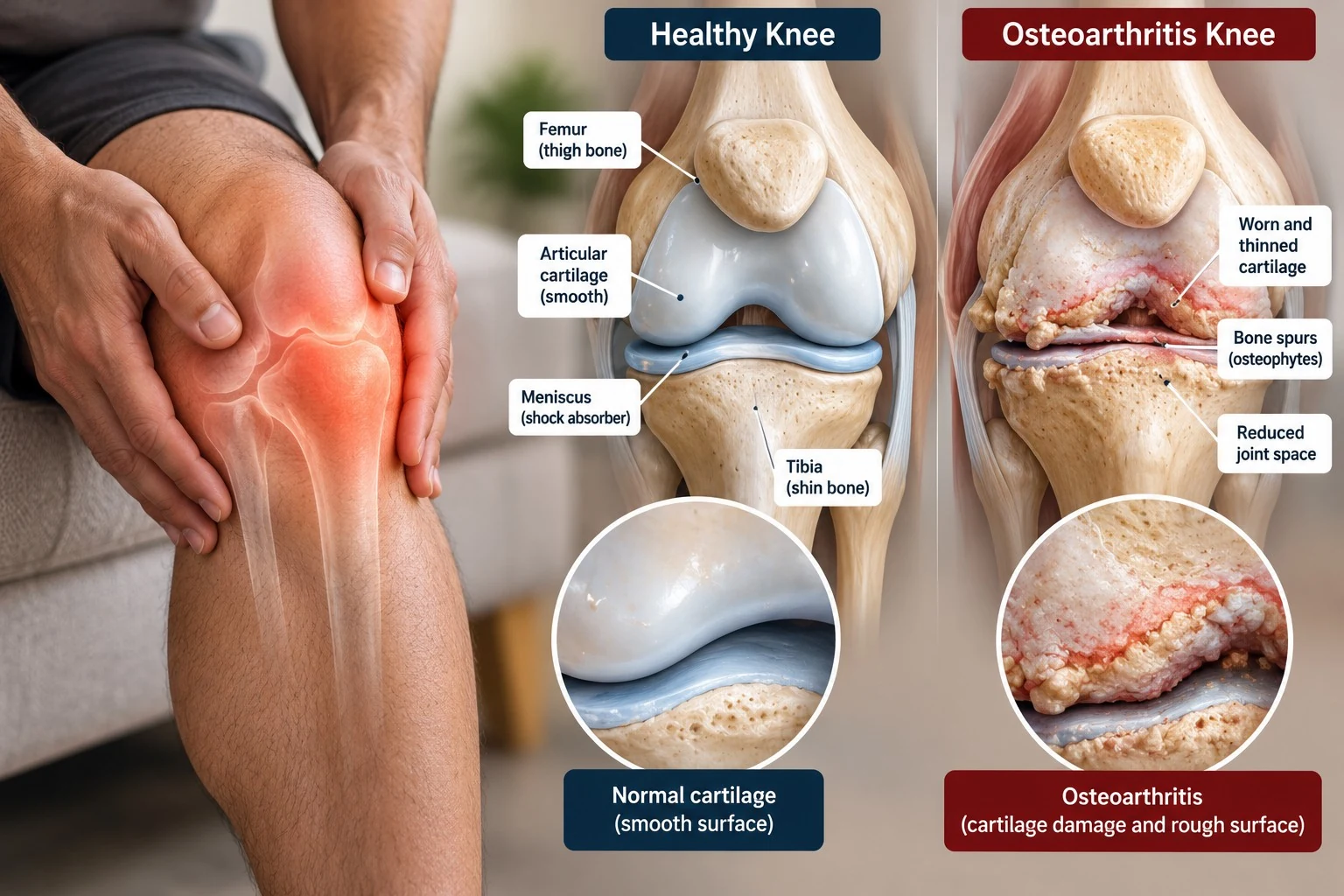
Treatment is individualised. Education, appropriate strengthening and other tailored exercise are central parts of osteoarthritis care. If weight management is relevant to you, even a manageable change may help reduce the load on painful joints. An X-ray is not automatically needed for every person with typical osteoarthritis symptoms; a healthcare professional can advise when investigations are appropriate.
2. Patellofemoral pain
Patellofemoral pain is pain around or behind the kneecap. It can be noticeable when climbing or descending stairs, squatting, running or standing up after sitting for a while. It may occur without a single injury and can relate to a combination of activity load, strength, movement tolerance and other individual factors.
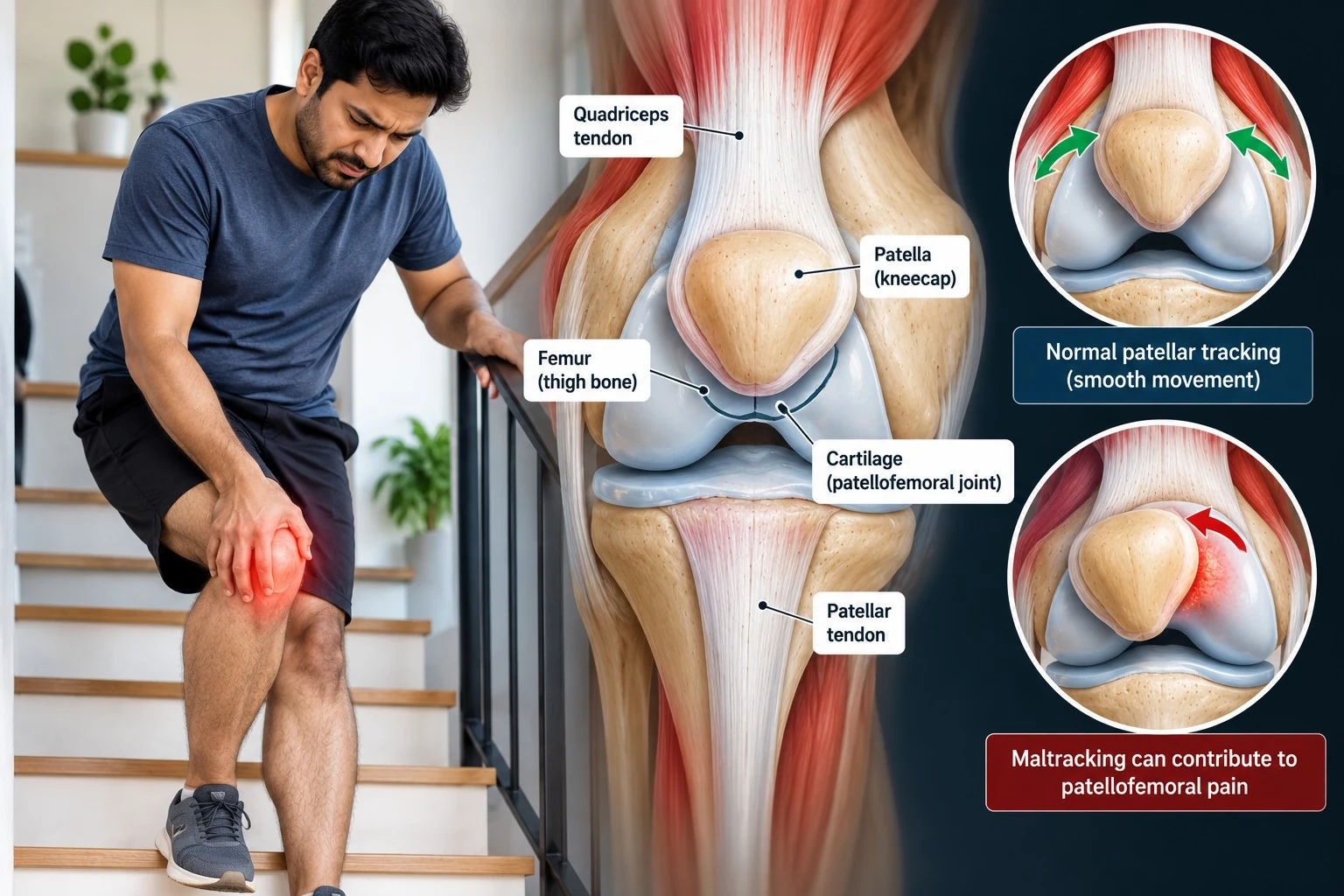
The assessment should consider the activities that reproduce symptoms and the person’s strength, mobility and functional capacity. A picture of kneecap movement alone cannot establish the diagnosis.
3. Tendon irritation or tendinopathy
The quadriceps tendon above the kneecap and the patellar tendon below it help transmit force when you straighten the knee. Repeated jumping, running, squatting, stair climbing or a sudden increase in activity can sometimes overload these tissues. Pain may be felt at the front of the knee and may be more noticeable with loading.
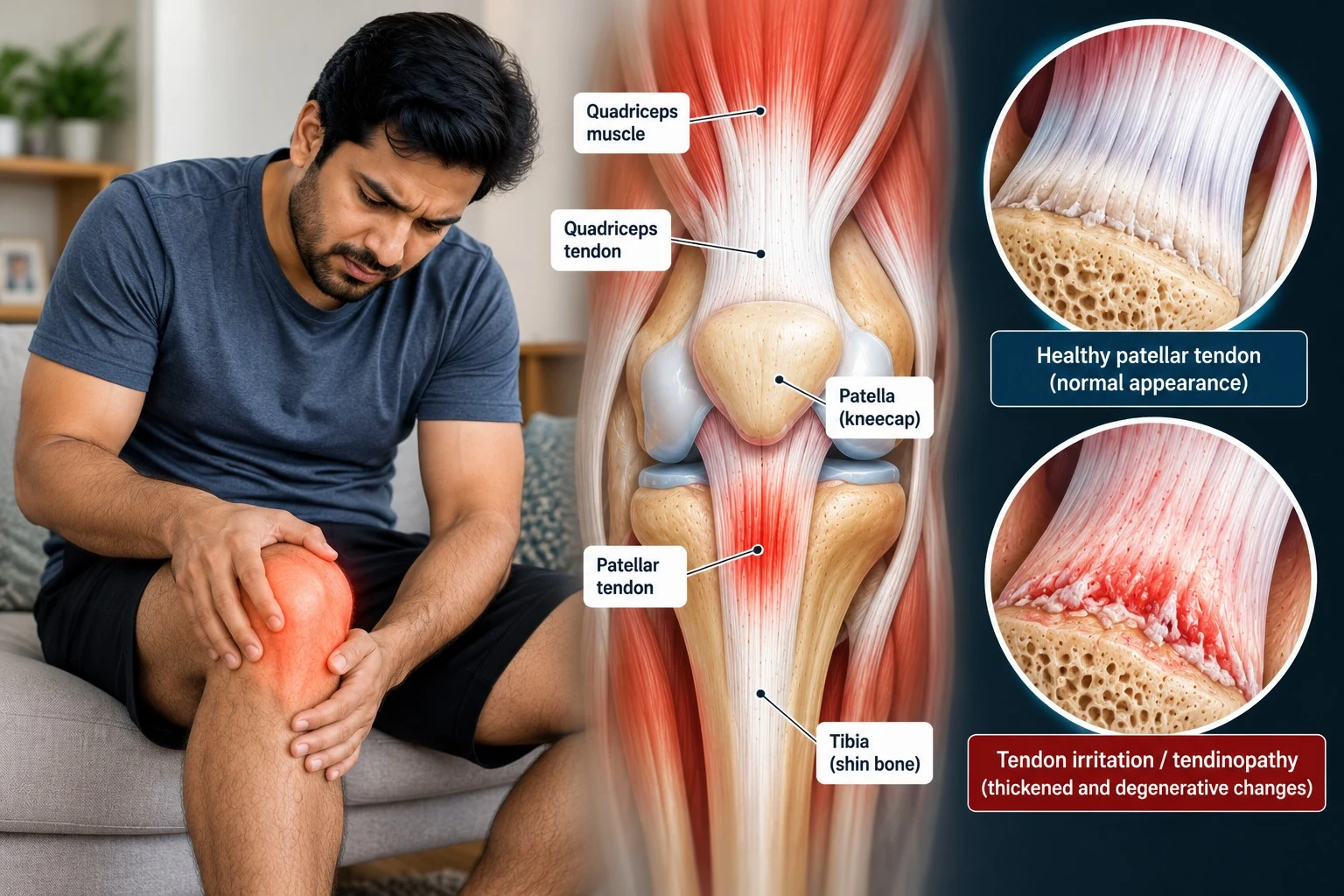
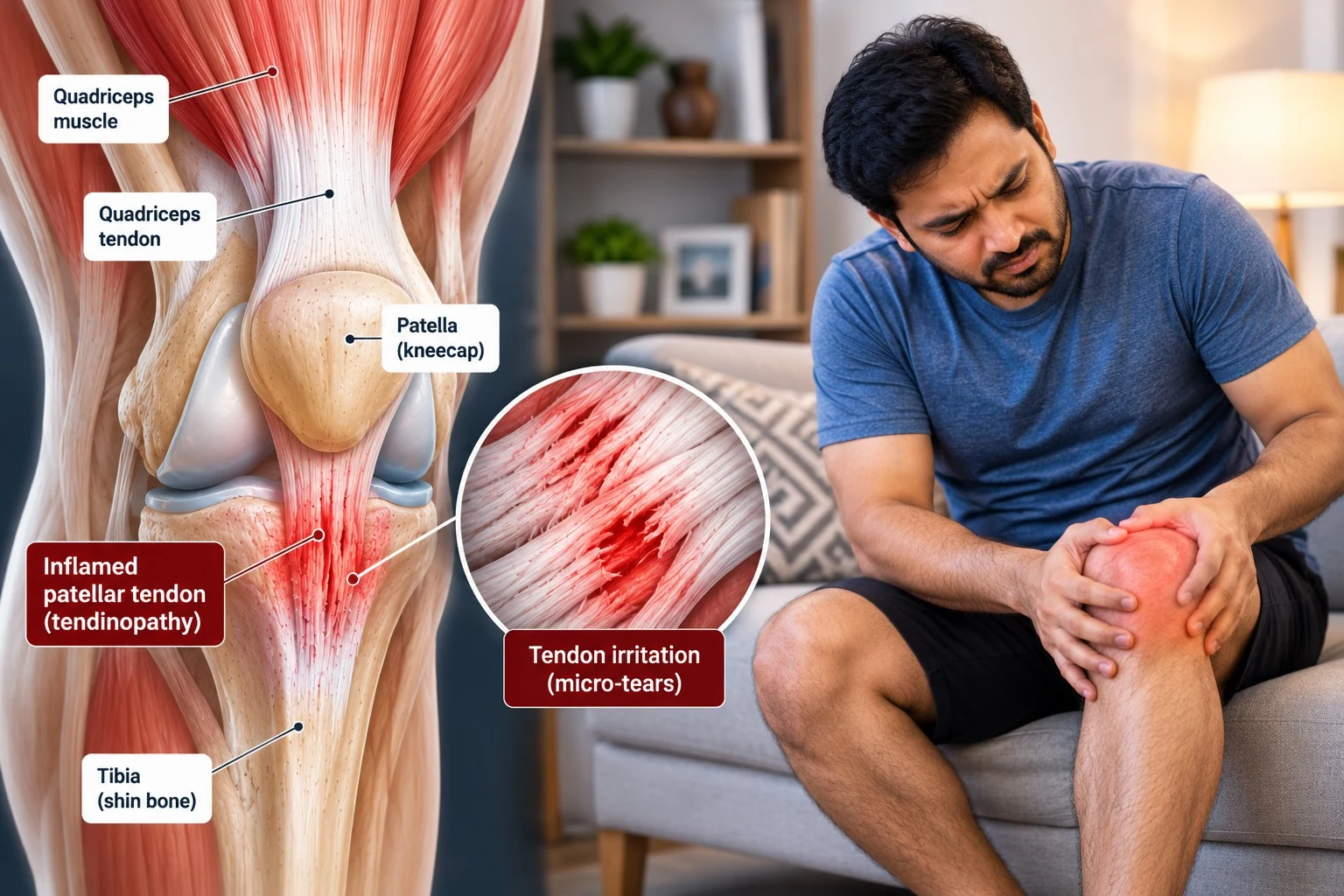
Tendon pain does not automatically mean that the tendon is torn. Management often involves adjusting aggravating loads and gradually rebuilding capacity with an appropriate exercise plan. Persistent or worsening pain needs assessment to check whether another condition may be responsible.
4. Bursitis
Bursae are small fluid-filled sacs that reduce friction between tissues. A bursa around the knee can become irritated and swollen, sometimes after repeated kneeling, pressure or without a clearly recalled trigger. Swelling may be prominent over the kneecap, with tenderness when touching or kneeling on the area.
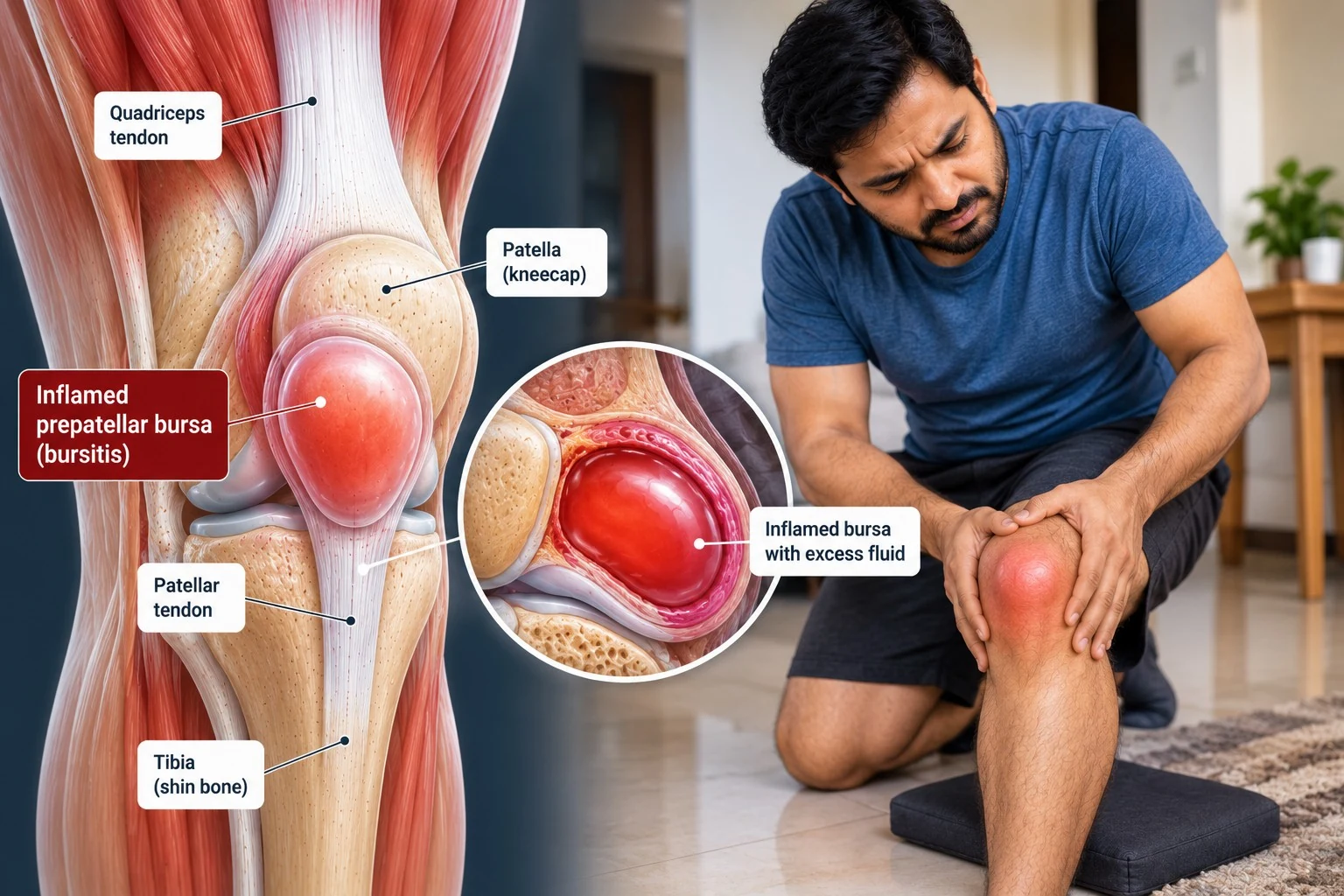
Do not assume a hot, red or rapidly swollen knee is simple bursitis. Fever, spreading redness or feeling unwell may indicate an infection and requires urgent medical assessment.
5. Inflammatory arthritis
Some forms of inflammatory arthritis can affect the knee and cause pain, swelling, warmth and stiffness. Morning stiffness, multiple affected joints or symptoms that persist or recur may be relevant clues, but these features are not diagnostic on their own.
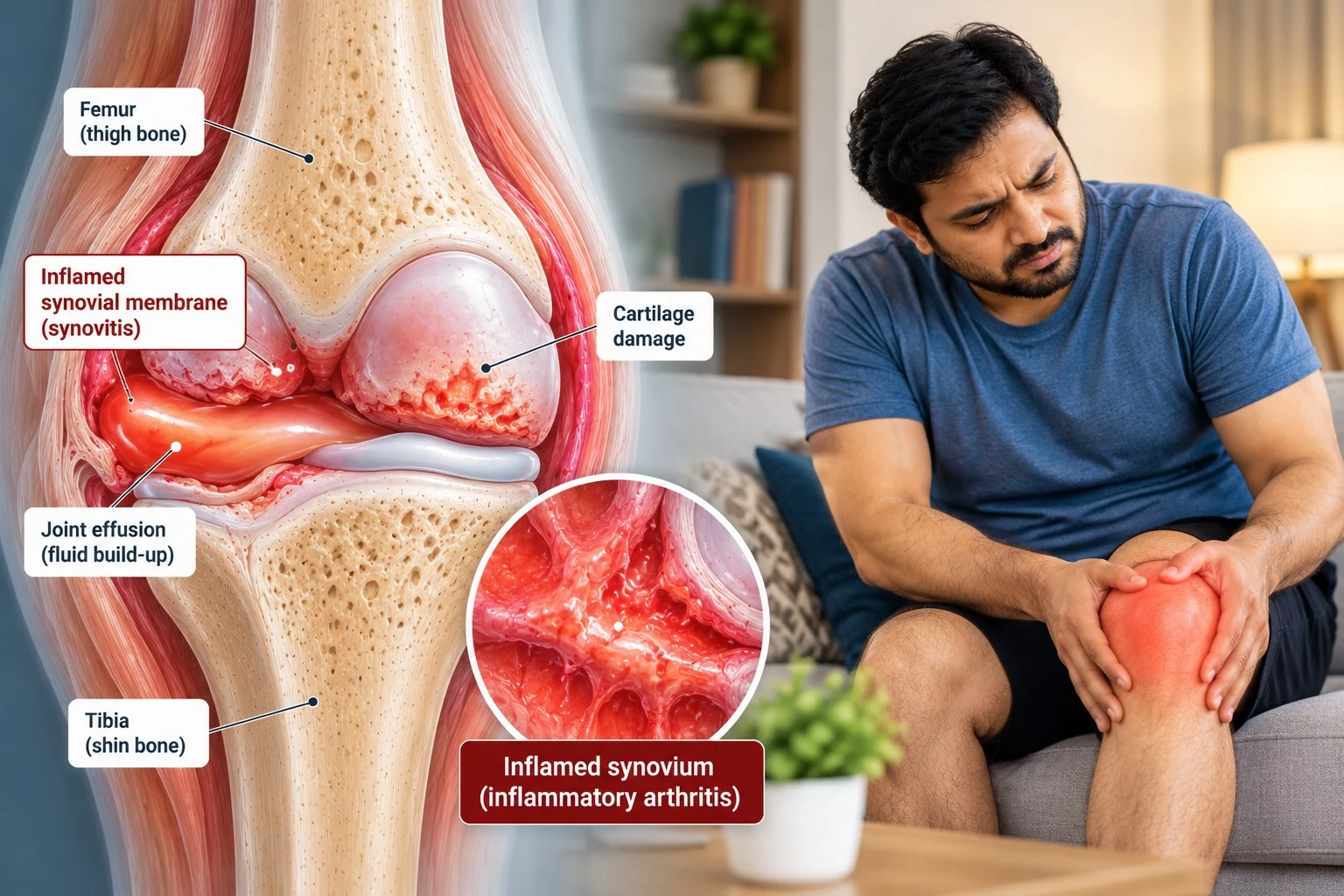
A doctor may need to assess for an inflammatory condition and decide whether blood tests, imaging or joint-fluid testing are appropriate. Physiotherapy may form part of a wider care plan once the cause and the safest level of activity are understood.
6. Gout
Gout is an inflammatory arthritis caused by urate crystal deposition. It can affect the knee, not just the big toe, and may cause a sudden episode of severe pain, warmth, redness and swelling. A first episode of a hot, swollen joint should not be self-diagnosed as gout because infection and other urgent conditions can look similar.
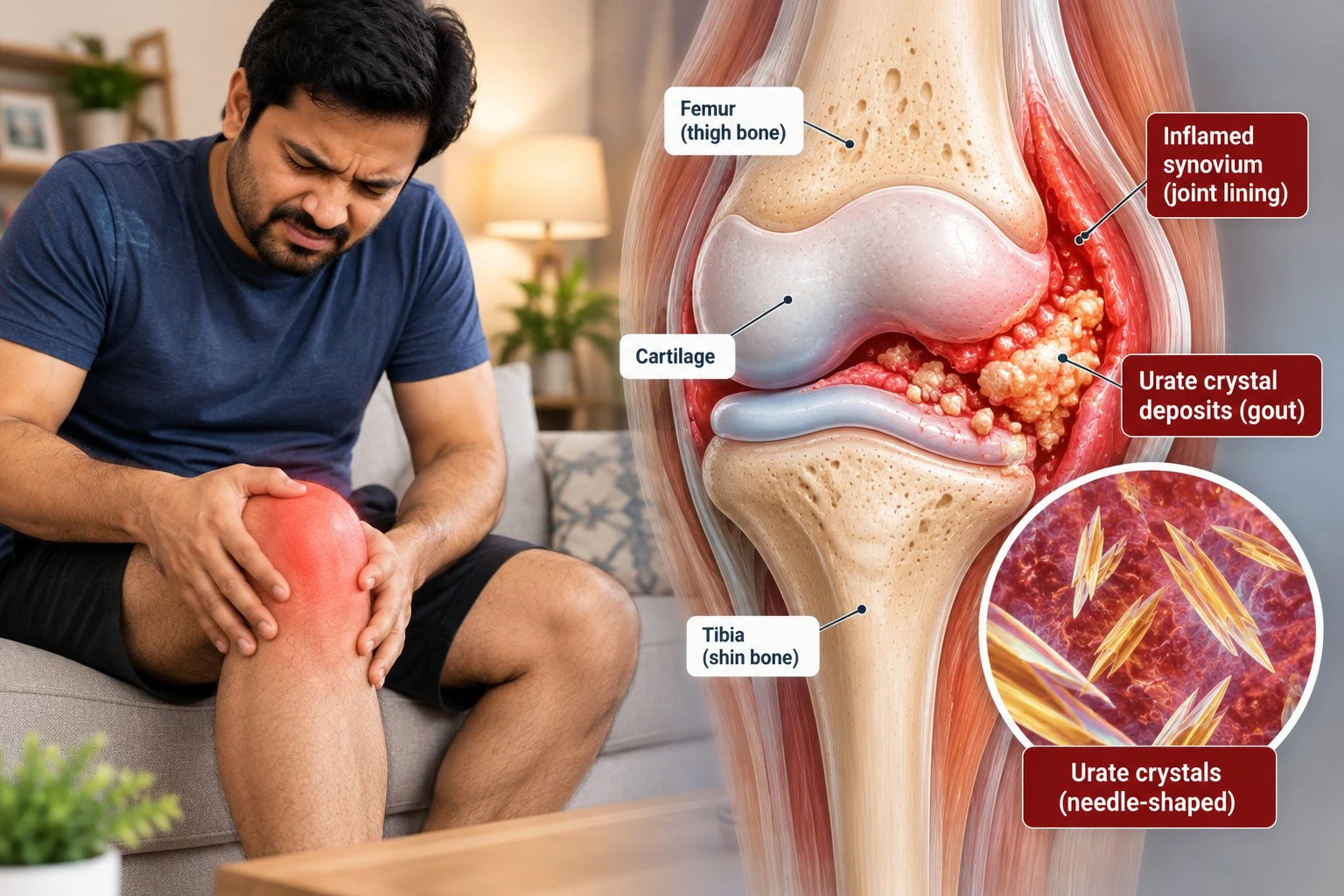
Seek prompt medical assessment for sudden severe knee pain, particularly if the joint is hot or red or you have fever. A clinician can determine whether testing and medical treatment are needed.
7. Baker’s cyst
A Baker’s cyst is a fluid-filled swelling behind the knee. It can cause tightness, discomfort or a feeling of fullness at the back of the knee and may be associated with another knee problem, such as arthritis or inflammation.
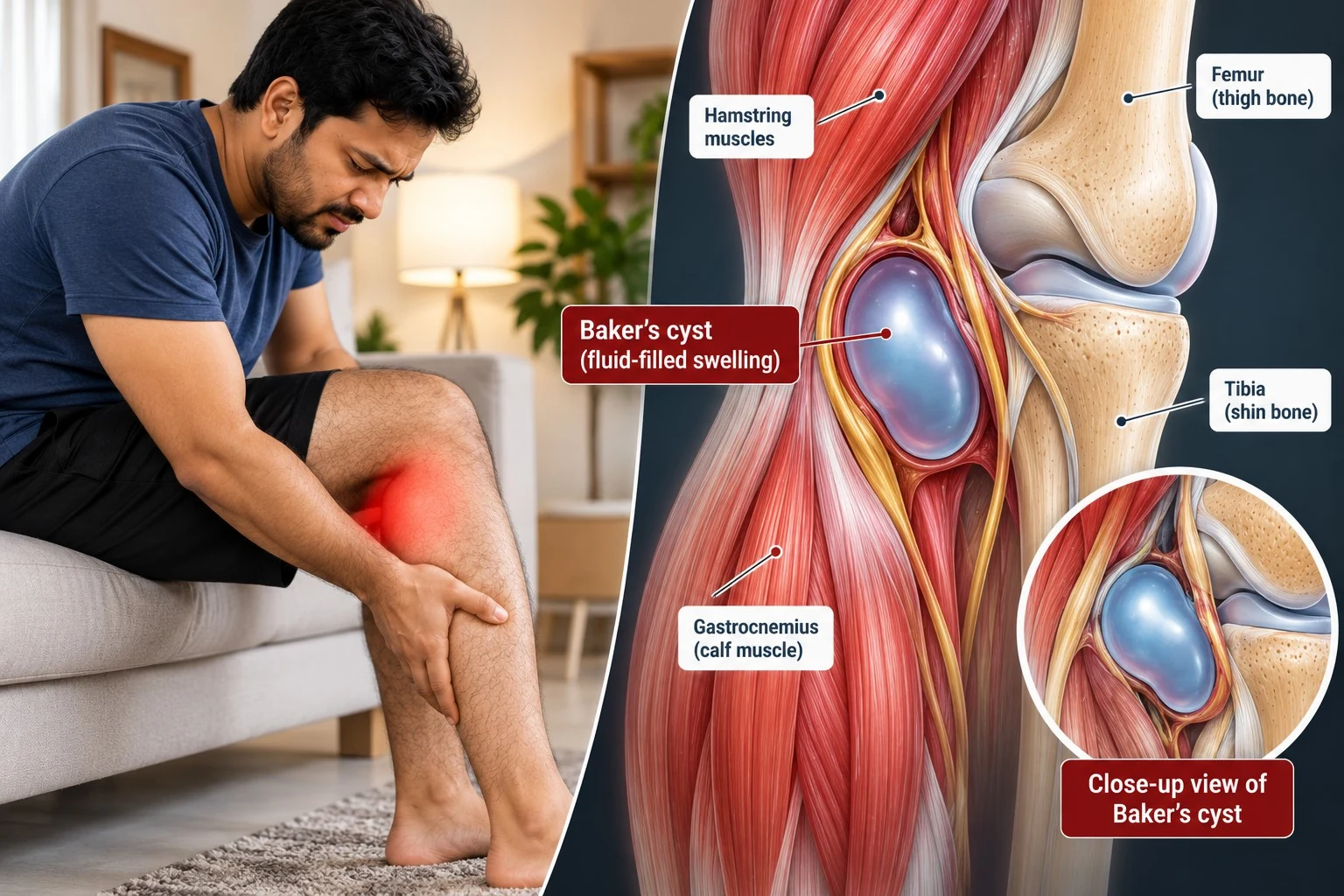
Sudden calf pain or swelling can sometimes occur if a cyst ruptures, but these symptoms can also indicate a blood clot. Seek urgent medical assessment rather than trying to distinguish these conditions at home.
8. A change in activity or the amount of load your knee can tolerate
Sometimes pain starts after a change in routine rather than a single injury—for example, walking much farther than usual, adding more stairs, returning to exercise after a break or increasing training too quickly. This does not mean that pain is imaginary or that one specific muscle is necessarily weak. It means that activity, recovery and tissue capacity may need to be considered together.
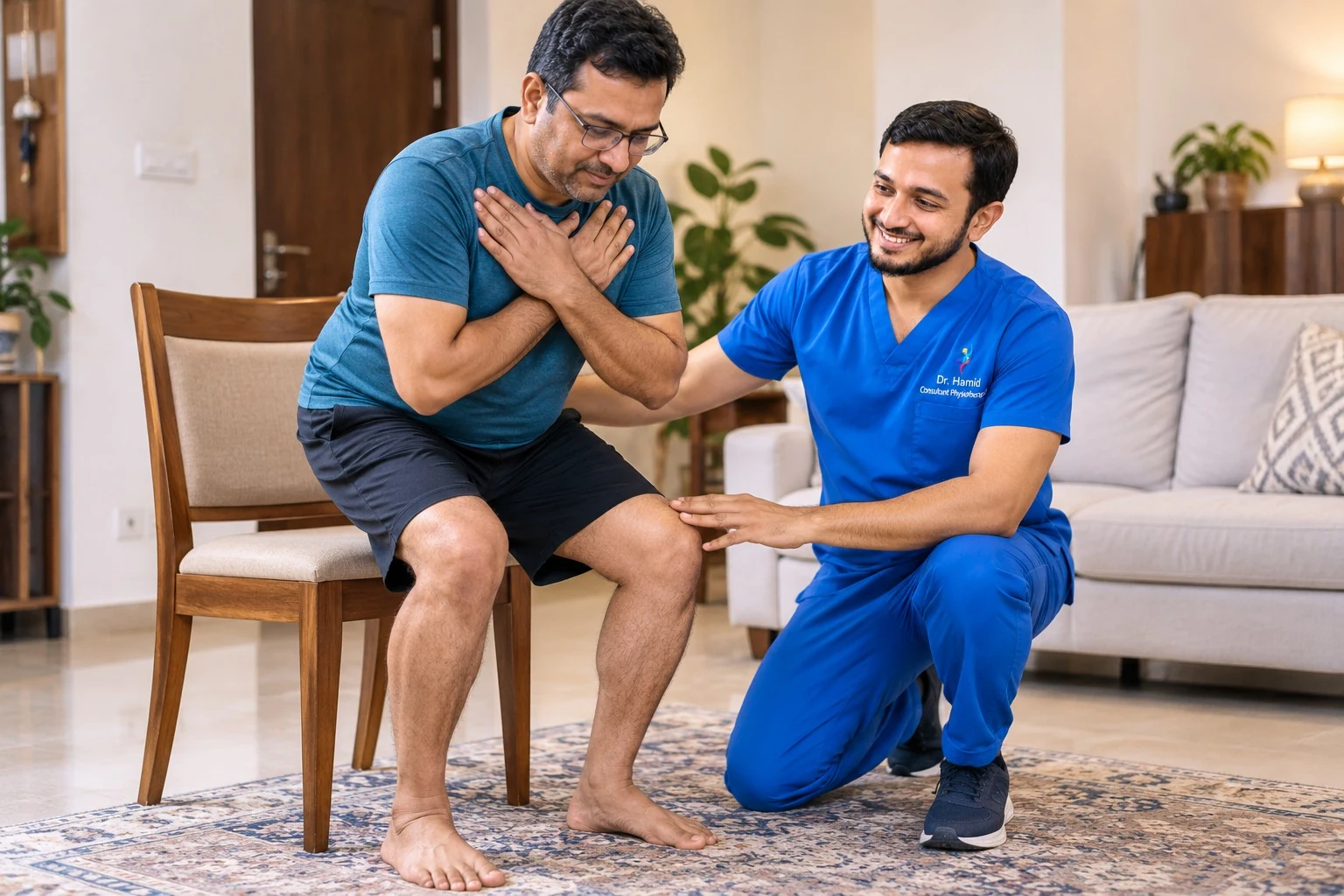
Temporarily reduce activities that sharply aggravate symptoms, but avoid complete rest for prolonged periods unless a clinician has advised it. As symptoms settle, a gradual return to movement and strengthening may help. The right progression depends on the cause, your health and how the knee responds.
What can the location and pattern of pain tell you?
| Symptom pattern | Possible explanation—not a diagnosis |
|---|---|
| Pain around or behind the kneecap with stairs or squats | Patellofemoral pain, among other causes |
| Pain at the front of the knee during repeated loading | Tendon-related pain or another anterior knee problem |
| Swelling directly over the kneecap | Bursitis is one possibility; warmth or redness needs careful assessment |
| Gradual pain and stiffness during walking or standing | Osteoarthritis or another joint condition |
| Sudden severe pain with a hot, red, swollen knee | Gout, infection or another acute inflammatory condition; urgent assessment is important |
| Fullness or swelling behind the knee | Baker’s cyst or another cause of posterior knee swelling |
| Persistent stiffness, swelling or several joints affected | An inflammatory condition may need to be considered |
No single symptom pattern confirms the cause. Do not use this table to rule out a serious condition.
What should I do for knee pain without an injury?
If the pain is mild and there are no warning signs, consider these general steps while monitoring your symptoms:
- Modify aggravating activities. Reduce the duration or intensity of movements that clearly worsen pain, especially repeated deep squats, kneeling or unusually long walks.
- Keep moving within your tolerance. Gentle, comfortable movement may be preferable to prolonged complete rest. Stop and seek advice if movement causes marked worsening.
- Consider a wrapped cold pack for swelling. Apply for up to 15–20 minutes at a time, with fabric between the pack and skin. Do not apply ice directly to the skin.
- Avoid guessing which exercise is right. Exercises suitable for one cause of knee pain may not be appropriate for another. Do not force a painful range or continue through severe pain.
- Arrange an assessment if symptoms persist, recur or limit daily activities. Earlier review is appropriate if swelling, stiffness or function is getting worse.
These measures are not a substitute for assessment when symptoms are severe or unusual.
When should knee pain be checked urgently?
Seek urgent medical care if:
- the pain is severe or you cannot move the knee or put weight on the leg;
- the knee is markedly swollen, deformed or suddenly gives way or locks;
- the knee is hot and red, especially with fever, chills or feeling unwell;
- you develop sudden calf swelling or pain, especially with a known or possible Baker’s cyst;
- symptoms began suddenly and are rapidly worsening.
If you have chest pain or shortness of breath along with leg swelling, seek emergency care. Do not delay urgent evaluation to try physiotherapy or home exercises first.
How can a physiotherapist assess knee pain?
A physiotherapist may ask when the pain began, where you feel it, what makes it better or worse, whether swelling or stiffness is present, and how symptoms affect walking, stairs, sleep and daily activities. The physical examination may include observation, movement, strength, functional tasks and selected special tests when appropriate.
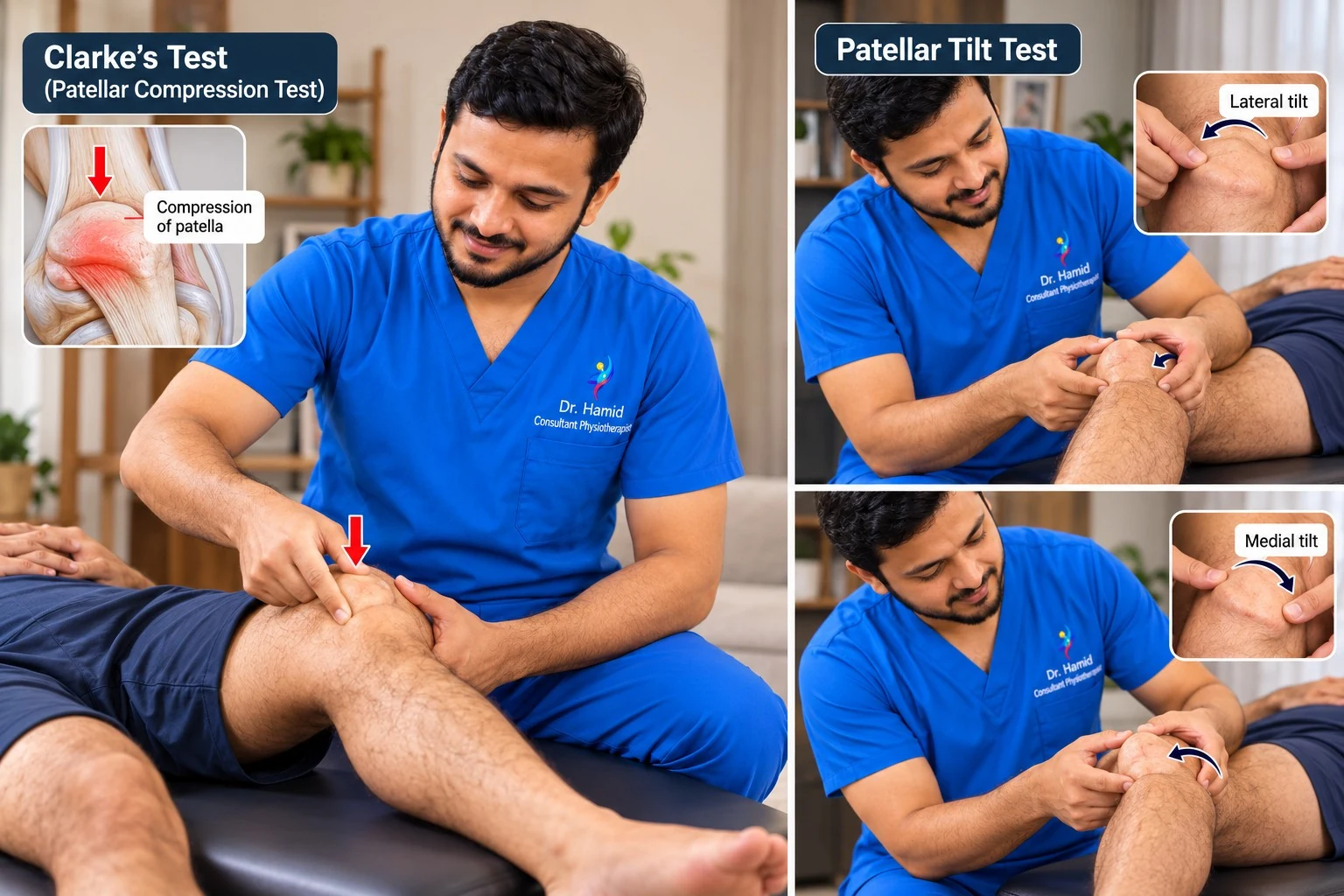
Special tests are only one part of an assessment and should not be interpreted in isolation. Some tests can provoke symptoms and have limitations; the clinician should select tests based on the history and examination. A hot, red joint or other warning signs may require medical referral rather than exercise testing.
Can physiotherapy help knee pain?
Physiotherapy may help many people with knee pain by improving movement, building strength and activity tolerance, and planning a safe return to daily tasks. The approach depends on the underlying cause. For osteoarthritis, tailored therapeutic exercise is a core treatment option; other causes may need medical treatment or additional investigation alongside rehabilitation.
At Dr Hamid’s Physio and Pain Clinic in Manikonda, Hyderabad, an assessment can help clarify functional limitations and whether physiotherapy is appropriate for your symptoms. If your knee is hot and red, you have fever, severe sudden pain or difficulty bearing weight, seek urgent medical care first.
For appointment information, visit Dr Hamid’s Physio and Pain Clinic. This article is educational and does not replace an individual assessment.
Frequently asked questions
Why does my knee hurt without an injury?
Knee pain can develop without a clear injury due to osteoarthritis, patellofemoral pain, tendon irritation, bursitis, inflammatory arthritis, gout, a Baker’s cyst or changes in activity. The cause cannot be confirmed from symptoms alone.
Can physiotherapy help knee pain?
Yes, physiotherapy may help depending on the cause. Treatment may include education, tailored exercise, activity modification and gradual rebuilding of strength and function. Some conditions also need medical assessment or medication.
What will a physiotherapist do for knee pain?
A physiotherapist usually takes a history and assesses movement, strength, function and relevant clinical signs. Selected tests may be used where appropriate, and referral may be recommended if the symptoms suggest a condition requiring medical care.
Is knee physiotherapy painful?
Assessment and exercise should be adapted to the person’s symptoms and condition. Some movement may feel uncomfortable, but severe or sharply worsening pain should not be pushed through. Tell the clinician what you feel so the plan can be adjusted.
What exercises are best for knee pain?
There is no single best exercise for every type of knee pain. The right choice depends on the cause, current symptoms, strength and function. A clinician can help select and progress exercises safely.
Can physical therapy make knee pain worse?
An exercise dose or movement that is too demanding can aggravate symptoms. The plan should be adjusted to your response. Stop and seek assessment if pain becomes severe, swelling increases substantially or warning signs develop.
Should I see a physiotherapist for knee pain?
Consider an assessment if pain persists, returns repeatedly or affects walking, stairs, sleep or everyday activities. Seek urgent medical assessment for a hot, red knee, fever, severe pain, inability to bear weight or sudden calf swelling.
What is the best physiotherapy for knee pain in Manikonda?
The appropriate physiotherapy plan depends on the reason for the pain and your individual goals. Look for a qualified physiotherapist who takes a detailed history, explains the findings, tailors the plan and refers you for medical review when needed. People searching for the best physiotherapy near me should prioritise appropriate assessment and evidence-informed care rather than a guaranteed result.
About the author
Dr. Mohammed Hamid Ali is a consultant physiotherapist at Dr Hamid’s Physio and Pain Clinic in Manikonda, Hyderabad.
References
- NHS. Knee pain.
- NICE. Osteoarthritis in over 16s: diagnosis and management (NG226).
- MedlinePlus. Knee pain.
- NHS. Joint pain.
- East Lancashire Hospitals NHS Trust. Knee pain not caused by an accident or injury.
Related clinic information
Learn about the clinic’s knee pain physiotherapy service and read the related guide to knee pain on stairs. Contact the clinic to ask about an assessment.