
Sciatica Pain: Why Does Pain Travel From Your Back to Your Leg?
Dr Hamid’s Physio and Pain Clinic — Manikonda, Hyderabad
By Dr. Mohammed Hamid Ali | Dr Hamid’s Physio and Pain Clinic, Manikonda, Hyderabad
Have you ever felt pain starting in your lower back or buttock and travelling down one leg? Do you experience tingling, numbness, burning pain or an electric-shock-like sensation while sitting, standing or walking?
These symptoms may be associated with sciatica.
Sciatica describes pain and other symptoms associated with irritation or compression of the sciatic nerve or its nerve roots. It often affects one side of the body and can extend from the lower back or buttock into the thigh, calf or foot. However, not every case of back pain or leg pain is sciatica, and the exact cause needs to be assessed.
At Dr Hamid’s Physio and Pain Clinic in Manikonda, Hyderabad, our educational focus is helping people understand pain, recognize warning signs and make informed decisions about assessment and rehabilitation.
What Is Sciatica?
Sciatica is a term used to describe symptoms that occur when the sciatic nerve or the nerve roots that contribute to it become irritated or compressed.
The sciatic nerve is the major nerve pathway supplying much of the lower limb. It originates from nerve roots in the lower spine, travels through the buttock and continues down the back of the leg, with branches extending towards the foot.
When these nerve structures are affected, symptoms may travel along part of this pathway.
Quick answer: Sciatica commonly causes pain that travels from the lower back or buttock down one leg. It may also cause tingling, numbness or weakness. A slipped or herniated disc is one possible cause, but other spinal conditions can produce similar symptoms.
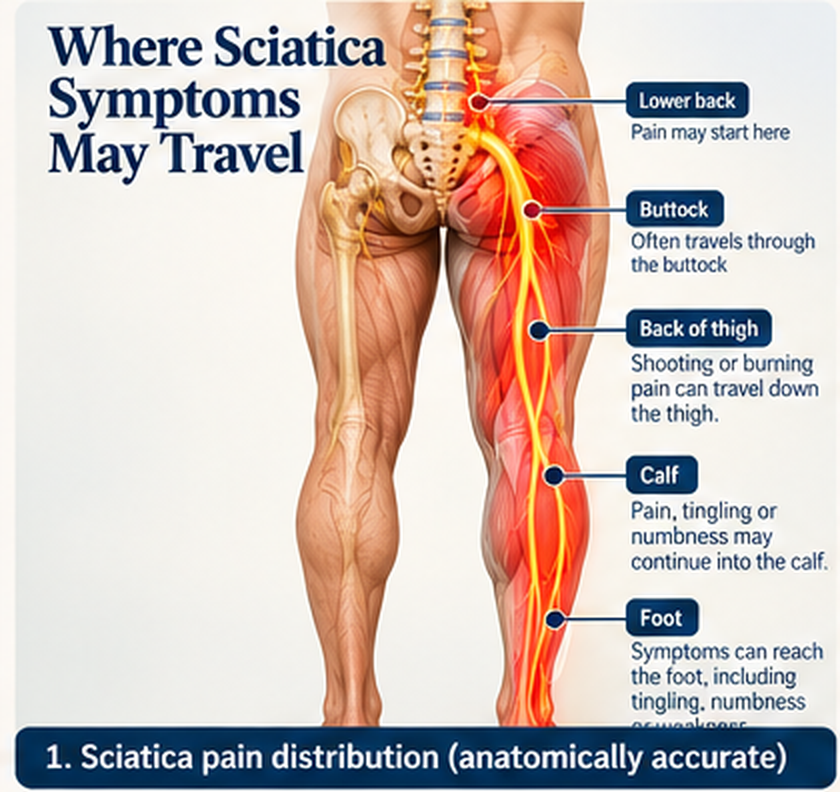
What Does Sciatica Pain Feel Like?
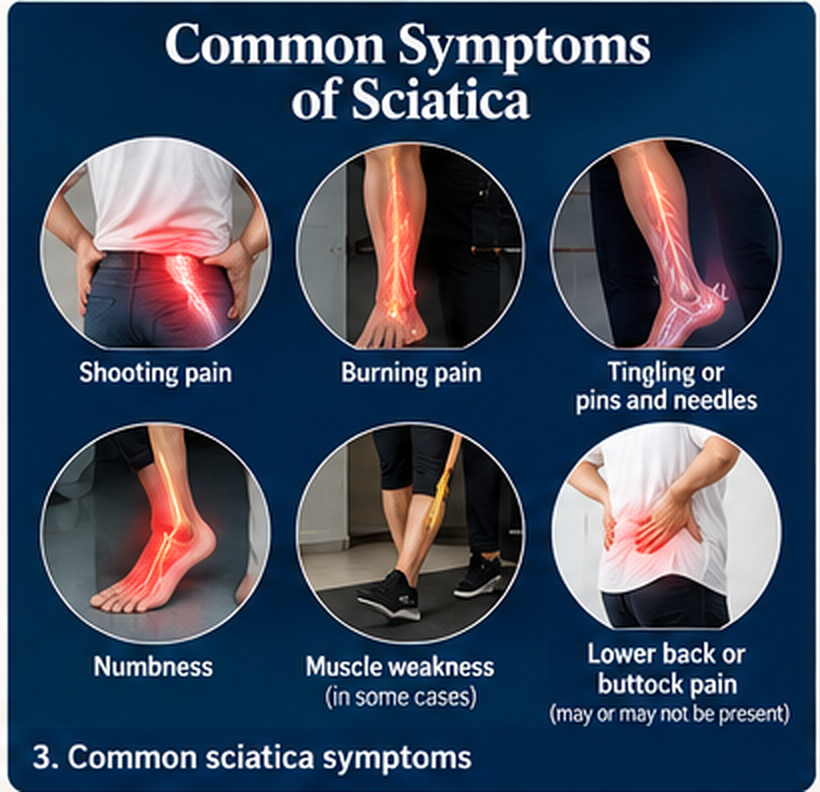
Sciatica can feel different from person to person. Common symptoms include:
- Sharp, shooting or electric-shock-like pain down the leg
- Burning pain in the buttock, thigh or calf
- Tingling or pins and needles
- Numbness in part of the leg or foot
- Pain that becomes more noticeable during certain movements or positions
- Weakness in some muscles of the affected leg or foot
Some people experience both lower back pain and leg pain. Others notice leg pain more than back pain.
The location and intensity of pain vary depending on the affected nerve structures and the underlying cause. Symptoms alone cannot reliably identify the exact spinal level or establish a diagnosis.
Why Does Pain Travel From the Back to the Leg?
Nerves carry signals between the brain, spinal cord and the rest of the body.
Nerve roots in the lower spine contribute to the sciatic nerve. If a nerve root becomes irritated or compressed, symptoms may be felt along the areas supplied by that nerve.
This is why a problem originating in the lower back can sometimes produce pain, tingling or numbness in the buttock, thigh, calf or foot.
The sensation is not necessarily caused by an injury at every location where pain is felt. However, other conditions affecting the hip, peripheral nerves or muscles can also produce leg pain, so a proper assessment is important.
What Causes Sciatica?
Several conditions can irritate or compress the nerve roots associated with sciatica.
1. Herniated or slipped disc
The discs between the spinal bones help distribute loads and allow movement. A disc can develop a bulge or herniation, and in some cases this may irritate or compress a nearby nerve root.
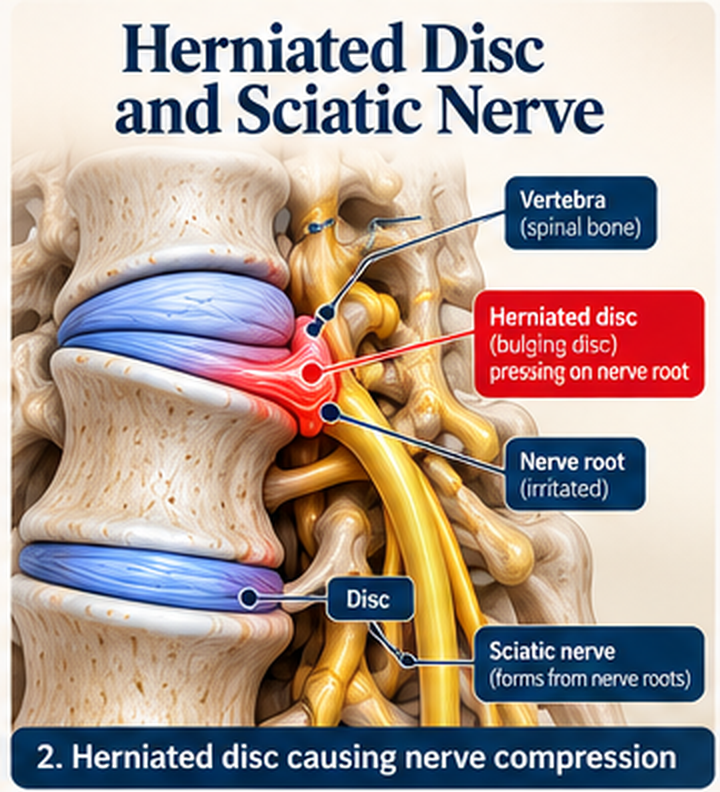
However, a disc bulge on an MRI does not automatically mean it is causing symptoms. Imaging findings need to be interpreted alongside the person's symptoms and clinical examination.
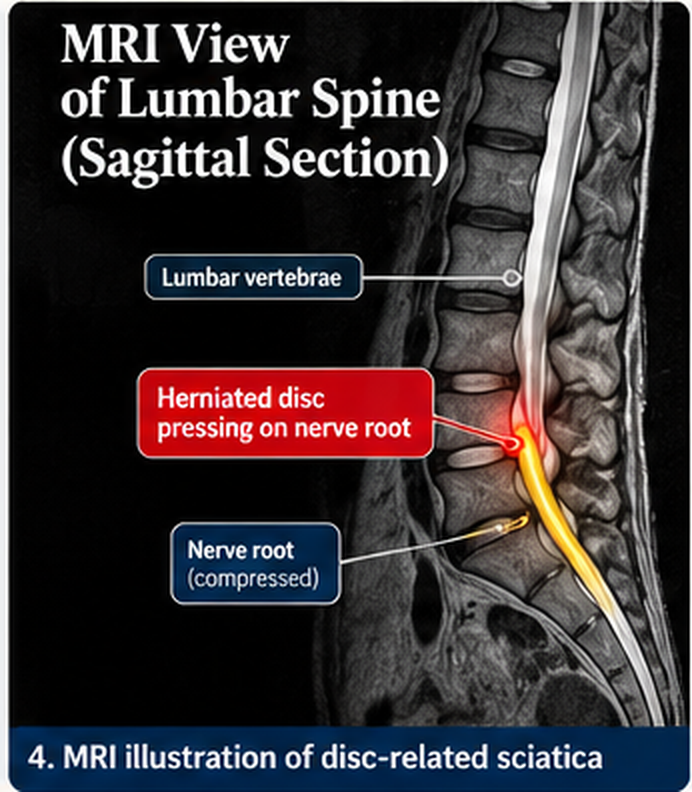
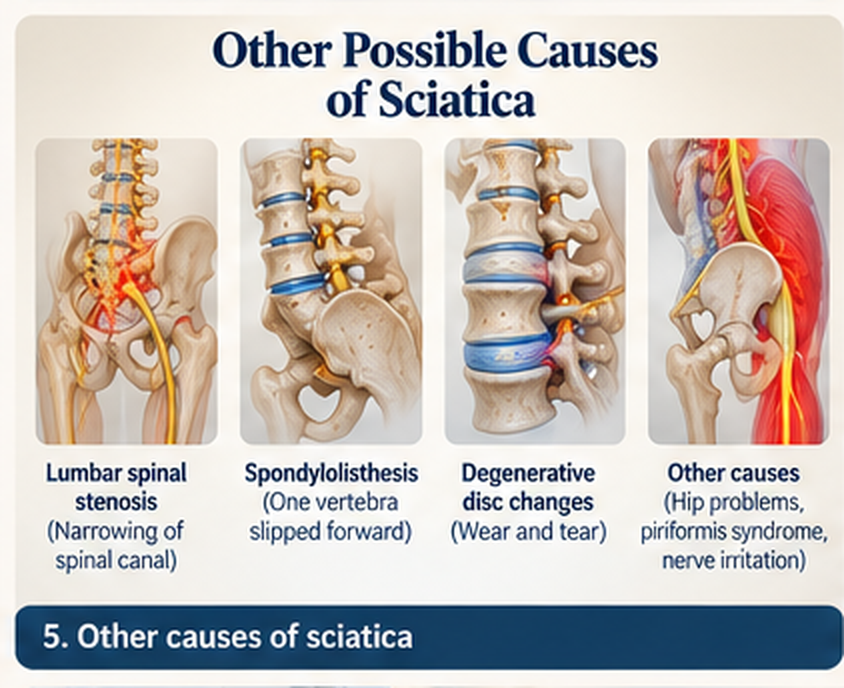
2. Lumbar spinal stenosis
Lumbar spinal stenosis means narrowing of spaces in the lower spine where nerve structures pass. Depending on the location and severity, this can contribute to nerve-related leg symptoms.
Some people notice symptoms during prolonged standing or walking, although the pattern varies.
3. Spondylolisthesis and other spinal conditions
Spondylolisthesis occurs when one spinal vertebra moves relative to another. In some cases, this can contribute to narrowing or irritation around nerve structures.
Other spinal conditions or injuries may also produce similar symptoms.
4. Other causes of buttock or leg pain
Not all pain travelling down the leg is true sciatica. Hip conditions, peripheral nerve problems and certain muscle or soft-tissue conditions may cause overlapping symptoms.
A clinician should consider these possibilities rather than assuming every episode of radiating pain is caused by a slipped disc.
Who Can Develop Sciatica?
Sciatica can affect adults of different ages. Factors that may be relevant include:
- Previous episodes of lower back pain
- Age-related changes in spinal structures
- Certain disc conditions
- Prolonged or repetitive physical loading
- Previous spinal injury
- Reduced physical conditioning or changes in activity
Having one of these factors does not mean someone will necessarily develop sciatica. It is also not possible to identify the cause from a person's occupation, posture or lifestyle alone.
Is Sciatica the Same as a Slipped Disc?
No. Sciatica and a slipped disc are not the same thing.
Sciatica describes a symptom pattern involving radiating nerve-related pain. A herniated or slipped disc is one possible structural cause.
A person can have a disc herniation without symptoms, and sciatica can occur for reasons other than a herniated disc.
A clinical assessment helps determine whether the symptoms are consistent with nerve-root involvement and whether further investigation is needed.
Can Physiotherapy Help Sciatica?
Physiotherapy may help many people with sciatica by supporting movement, improving function and guiding an appropriate rehabilitation programme. The right approach depends on the underlying cause, symptom severity, examination findings and the person's overall health.
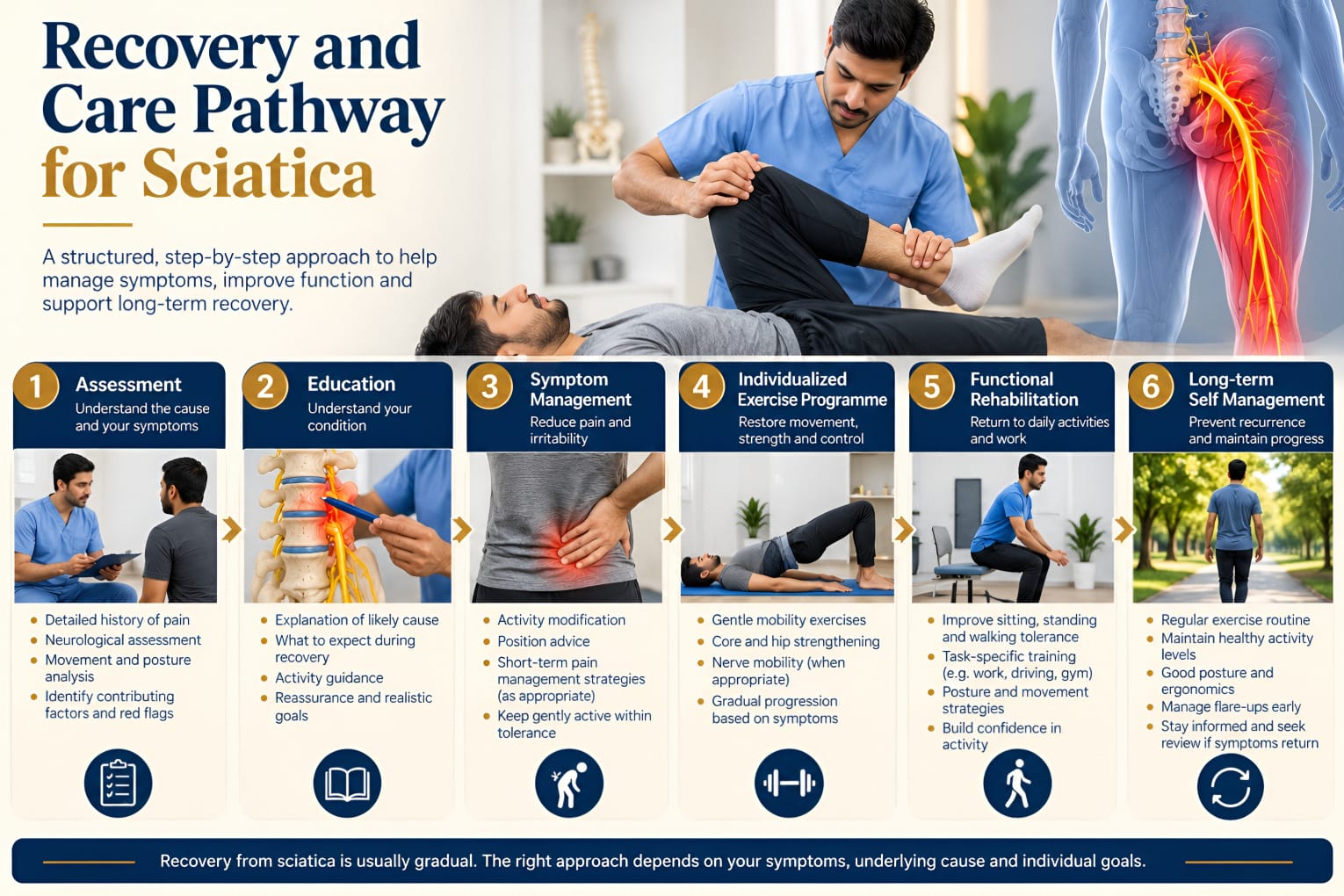
A physiotherapy assessment may include:
- A detailed history of back and leg symptoms
- Questions about symptom onset, duration and aggravating activities
- Assessment of walking and functional movement
- Appropriate examination of lower-limb strength, sensation and reflexes
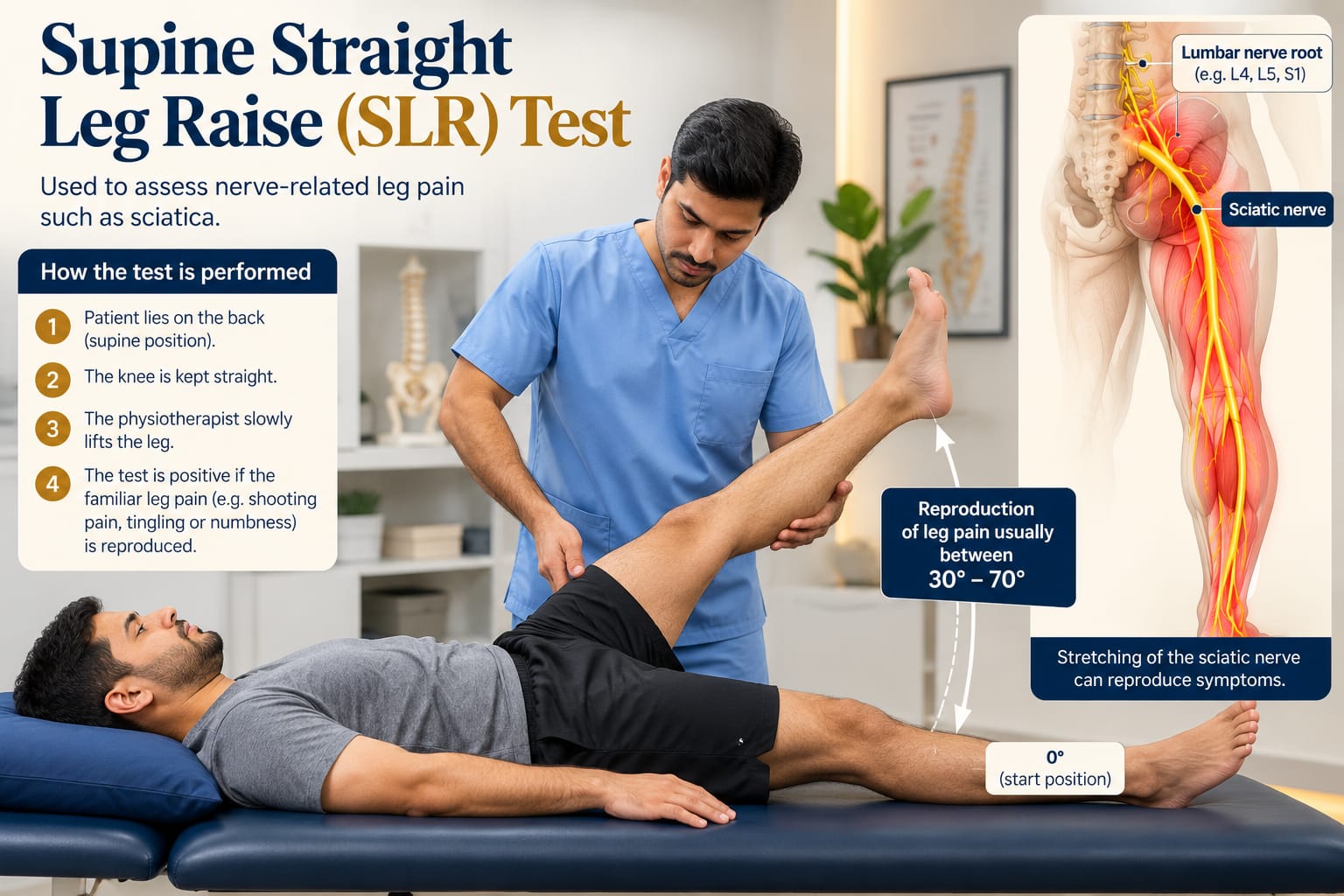
- Selected movement or nerve-related tests when indicated
- Screening for symptoms that require medical referral
The findings help guide the next steps. Not everyone with sciatica needs the same exercises, treatment techniques or investigations.
What may a physiotherapy programme include?
Depending on the assessment, treatment may involve:
Education and reassurance: Understanding symptoms, activity tolerance and appropriate recovery expectations.
Activity modification: Adjusting activities that significantly aggravate symptoms without unnecessarily avoiding all movement.
Individualized exercise: Selected mobility, strengthening, movement-control or general conditioning exercises when appropriate.
Functional rehabilitation: Gradually working towards meaningful goals such as sitting comfortably, walking, returning to work or resuming everyday activities.
Progress monitoring: Reviewing symptoms, function and response to treatment and adapting the programme as needed.
Hands-on treatment may be considered as part of an individualized programme, but it should not replace appropriate assessment, exercise and medical referral when necessary.
No physiotherapy technique can guarantee a cure, and treatment should not be promoted as a substitute for urgent medical care when warning signs are present.
What Can You Do at Home for Sciatica?
If symptoms are mild and there are no warning signs, some general measures may help you manage day-to-day activities while arranging appropriate assessment if needed.
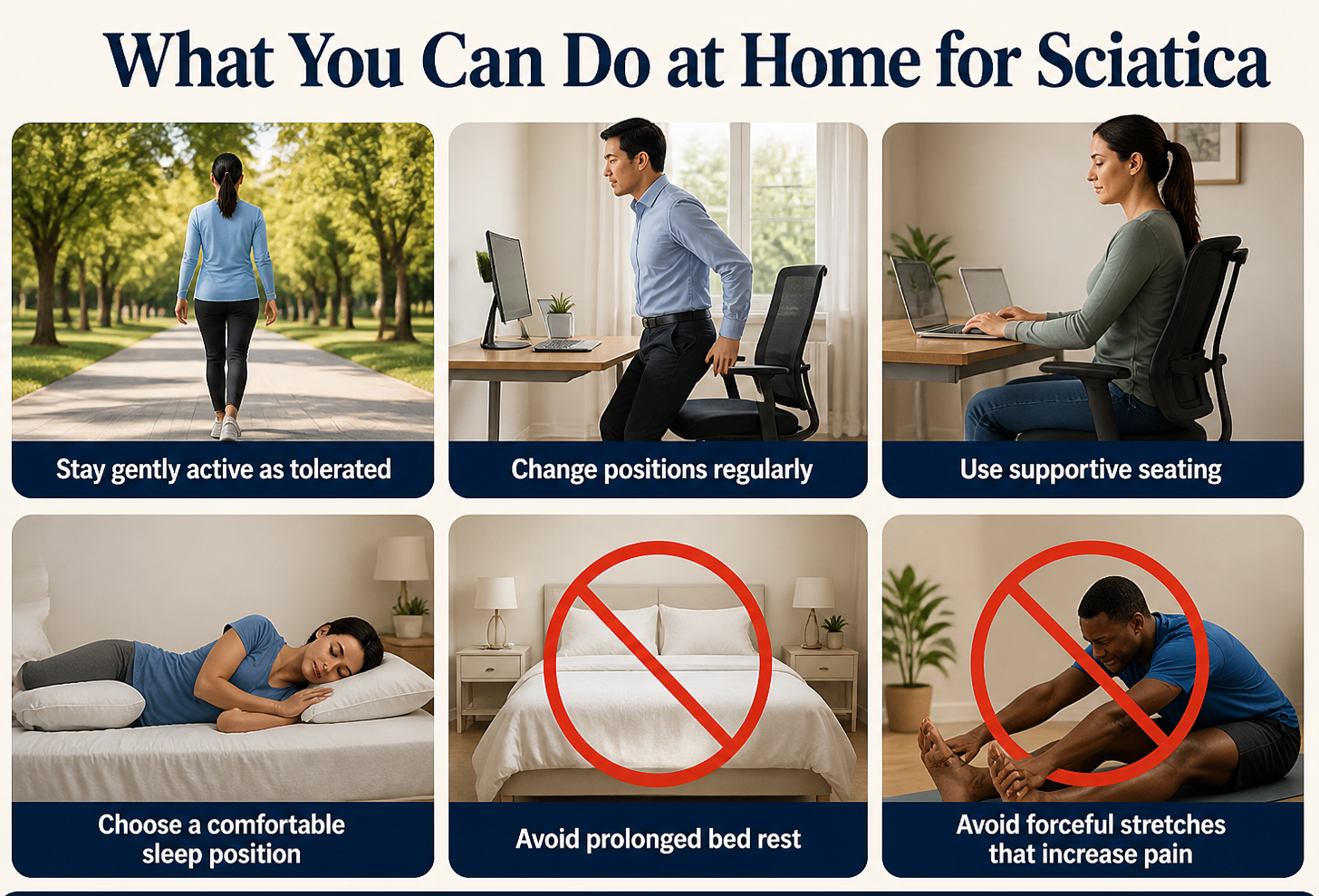
Stay gently active as tolerated
Try to maintain comfortable everyday movement rather than remaining in bed or sitting for long periods. Short, manageable walks may suit some people, but activity should be adapted to symptoms and individual circumstances.
Change positions regularly
If sitting for a long time aggravates your symptoms, try changing positions and taking movement breaks. There is no single sitting posture that is perfect for everyone.
Avoid forcing painful stretches
Online sciatica exercises are not suitable for every cause of radiating leg pain. Stop an exercise if it causes marked worsening, new numbness or weakness, and seek clinical advice.
Be cautious with self-treatment
Do not assume that forceful spinal manipulation, aggressive stretching or repeated nerve tensioning will solve the problem. The appropriate approach depends on the underlying condition and clinical findings.
If symptoms persist, worsen or interfere with ordinary activities, arrange an assessment with an appropriate healthcare professional.
Which Exercises Are Best for Sciatica?
There is no single exercise that is best for every person with sciatica.
The selection and progression of exercise depend on factors such as:
- The likely cause of symptoms
- The distribution of pain
- The presence of numbness or weakness
- Movement tolerance
- Other medical conditions
- Functional goals and recovery progress
A physiotherapist may select exercises to support mobility, strength, movement tolerance or general conditioning. Nerve-mobility exercises may be appropriate in selected cases, but they should not be prescribed indiscriminately.
Important: If you have progressive weakness, significant new numbness or other warning signs, do not try to manage the symptoms through exercise alone. Seek appropriate medical assessment.

How Long Does Sciatica Take to Improve?
Recovery time varies.
Some episodes improve over several weeks, while others persist longer depending on the cause, severity, overall health and response to management.
There is no reliable number of days or physiotherapy sessions that applies to everyone. A clinician can help set realistic goals and review whether symptoms and function are improving.
If pain is worsening, remains troublesome after a few weeks of self-management, or stops you from performing normal activities, seek medical assessment rather than repeatedly trying the same treatment without review.
When Is Sciatica an Emergency?
Most cases of radiating leg pain do not automatically indicate a medical emergency, but certain symptoms require immediate assessment.
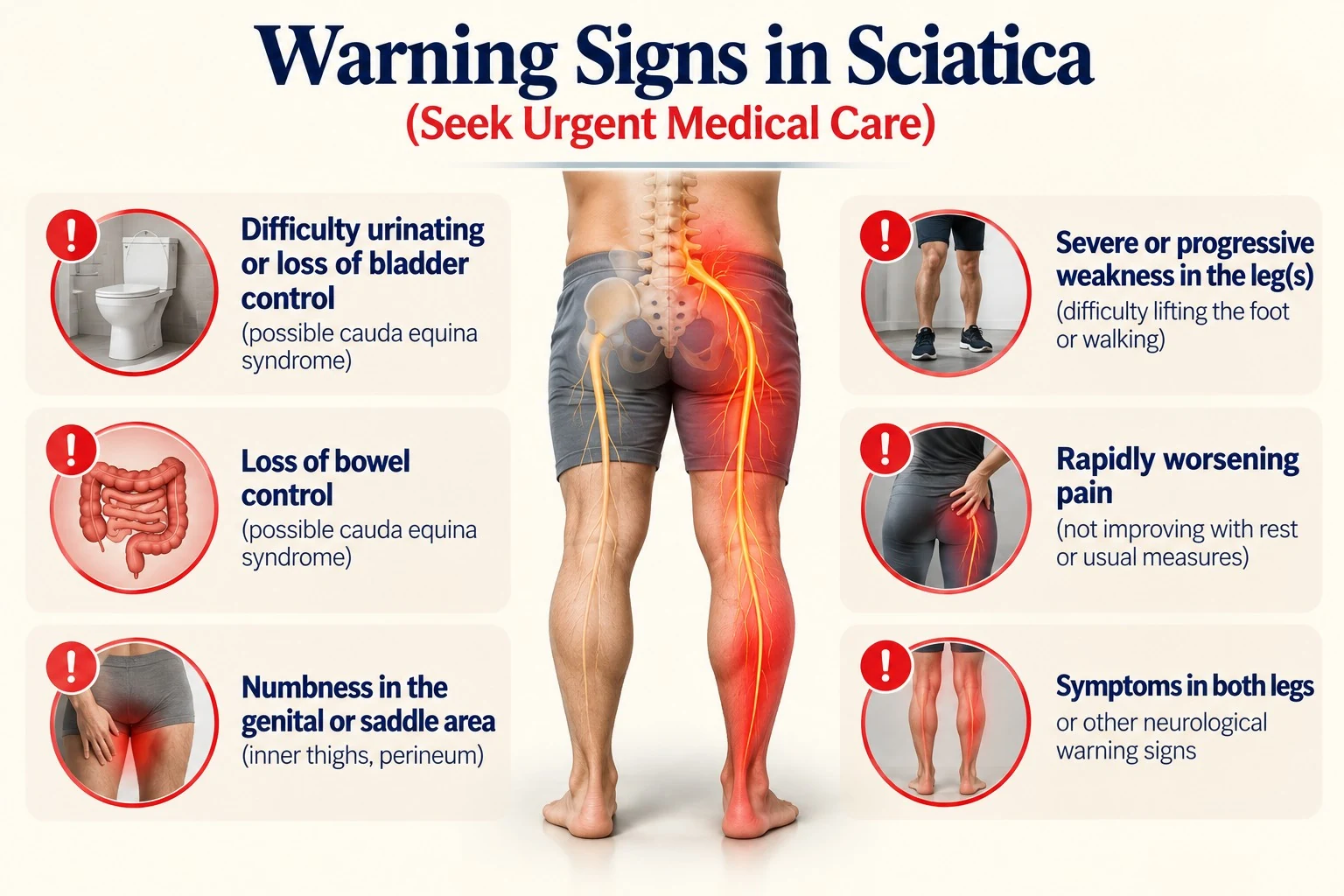
Seek emergency medical care immediately if you develop:
- New difficulty starting urination, inability to urinate or loss of bladder control
- Loss of bowel control
- Numbness around the genitals, inner thighs or area that would contact a saddle
- Severe or worsening weakness, especially affecting both legs
- Severe symptoms affecting both legs alongside other neurological warning signs
These symptoms can indicate serious nerve compression, including cauda equina syndrome, and should not be managed by waiting for a routine physiotherapy appointment.
Seek prompt medical assessment for new or progressive leg weakness, significant changes in sensation, fever with severe back pain, major trauma, or other concerning symptoms.
Does Everyone With Sciatica Need an MRI?
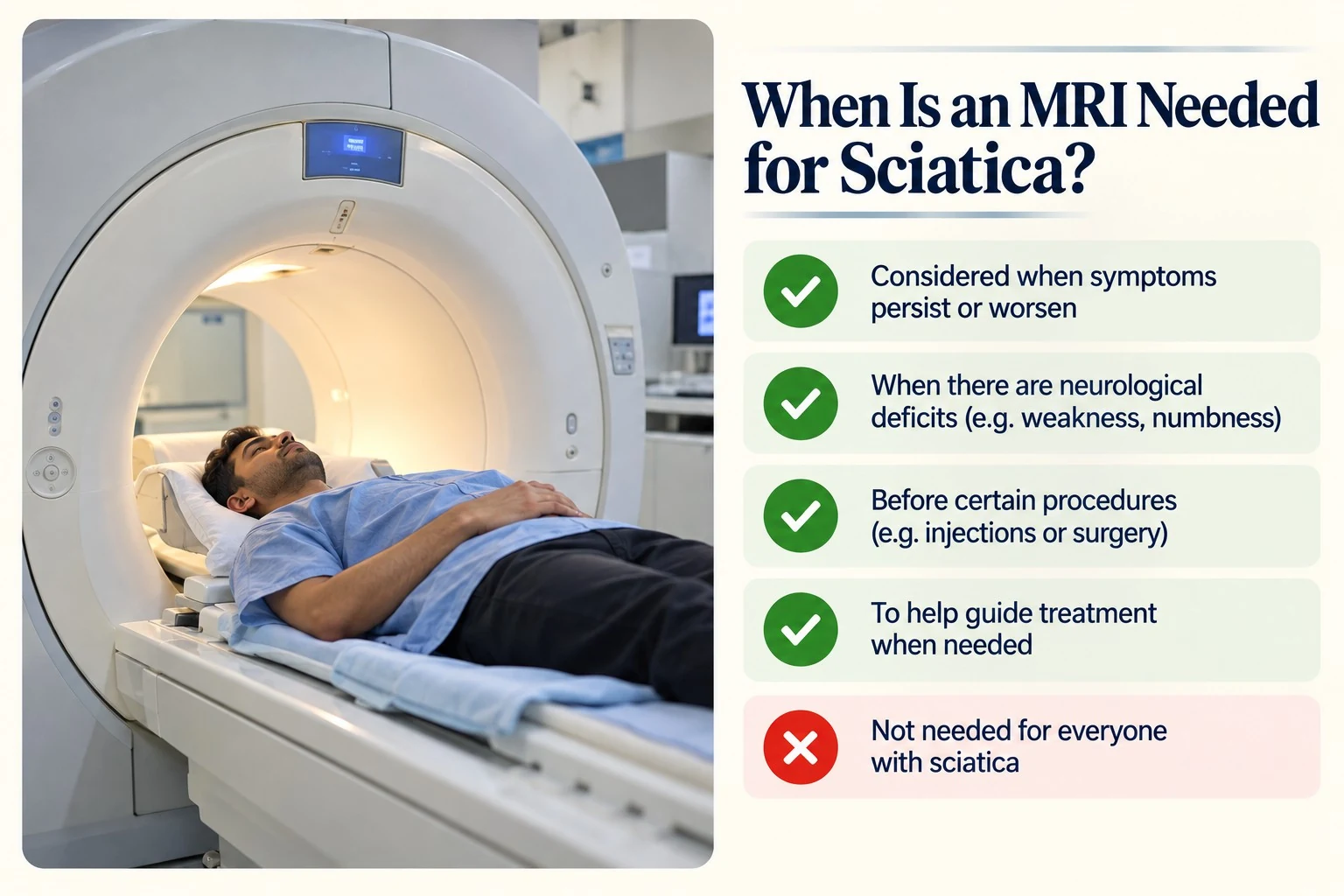
No. An MRI is not automatically necessary for every person with sciatica.
The decision depends on the clinical assessment, symptom duration, neurological findings, warning signs and whether imaging is likely to change management.
Urgent imaging may be needed when a serious condition is suspected. In other situations, a clinician may initially recommend conservative management and reassessment.
Do not interpret an MRI report in isolation. Structural findings need to be considered alongside the person's symptoms and examination.
Sciatica Physiotherapy in Manikonda, Hyderabad
If lower back pain, buttock pain or radiating leg symptoms are affecting your daily activities, a professional assessment can help clarify the likely cause and determine appropriate next steps.
Dr Hamid’s Physio and Pain Clinic is based in Manikonda, Hyderabad.
During an appropriate physiotherapy assessment, the aim is to understand your symptoms, assess relevant movement and functional limitations, identify warning signs and determine whether physiotherapy is suitable or medical referral is needed.
If you are searching for sciatica physiotherapy in Manikonda, back pain physiotherapy in Hyderabad or a physiotherapist near Manikonda, you can find the clinic through the links below.
- Website: Dr Hamid’s Physio and Pain Clinic
- Google Maps: Find the clinic
- Instagram: @drhamidphysio
Contact the clinic to enquire about an appointment. Treatment recommendations and expected recovery depend on an individual assessment.
Frequently Asked Questions About Sciatica
What is the main symptom of sciatica?
A common symptom is pain travelling from the lower back or buttock down one leg. Tingling, numbness or weakness may also occur.
Can sciatica occur without lower back pain?
Yes. Some people experience leg pain more prominently than back pain. However, other conditions can produce similar symptoms, so assessment is important.
Is walking good for sciatica?
Gentle walking may be helpful for some people, provided it is tolerated and there are no warning signs. Adjust the duration and intensity to your symptoms rather than forcing yourself through severe or worsening pain.
Can sciatica be cured without surgery?
Many people improve without surgery, depending on the cause and severity. Management may include appropriate activity, exercise, symptom management and physiotherapy. Some conditions require medical or surgical assessment.
Can a slipped disc cause sciatica?
Yes. A herniated disc can irritate or compress a nerve root and cause sciatica. However, not every slipped disc causes symptoms, and not all sciatica is caused by a disc problem.
Should I rest completely if I have sciatica?
Prolonged bed rest is generally not recommended for uncomplicated sciatica. Maintaining tolerable activity and changing positions regularly may help, but specific advice depends on your condition.
When should I see a physiotherapist for sciatica?
Consider an assessment if symptoms persist, recur or interfere with sitting, walking, work or daily activities. Seek urgent medical care first if you have bladder or bowel changes, saddle-area numbness or severe/progressive neurological symptoms.
Does sciatica always require an MRI?
No. Imaging is selected according to clinical findings and whether the result is likely to change management. A clinician can advise whether it is appropriate.
Final Takeaway
Sciatica can cause pain that travels from the lower back or buttock into the leg because of irritation or compression involving nerve structures. A herniated disc is one possible cause, but other spinal and non-spinal conditions can produce similar symptoms.
The safest approach is to understand the symptom pattern, recognize warning signs and obtain an appropriate assessment rather than assuming every episode of leg pain is a slipped disc.
For persistent or function-limiting symptoms, individualized management—including physiotherapy when appropriate—may help support recovery and everyday function.
Medical Disclaimer
This article is for general educational purposes and does not replace individual medical advice, diagnosis or treatment. Seek emergency care for symptoms suggestive of serious nerve compression, including new bladder or bowel dysfunction, saddle-area numbness or severe/progressive neurological weakness.
References and Further Reading
The following resources provide patient information and clinical guidance relevant to sciatica, assessment, imaging and management. They should be checked again during the clinician’s final review.
- NHS — Sciatica
- National Institute for Health and Care Excellence (NICE) — Low back pain and sciatica in over 16s: assessment and management (NG59)
- NICE — NG59 recommendations
- MedlinePlus — Sciatica
- American College of Radiology — ACR Appropriateness Criteria: Low Back Pain
- RadiologyInfo.org — Low Back Pain: Appropriateness Criteria
- Mayo Clinic — Sciatica
- Cleveland Clinic — Sciatica
- American Academy of Orthopaedic Surgeons (AAOS) — Sciatica
- National Institute of Neurological Disorders and Stroke (NINDS) — Low Back Pain
- World Physiotherapy — India country profile
These references support general education only. The treating clinician should verify their current content and applicability before publication.