Having lower back pain? Physiotherapy can help you manage pain, improve movement and work towards getting back to your daily activities. Sometimes, you may need both physiotherapy and specialist care.
Wondering whether to consult an orthopaedician or visit a physiotherapist first? A proper assessment of your symptoms, movement and functional limitations can help determine the most appropriate course of care for your condition.
For many people with lower back pain, physiotherapy assessment and rehabilitation can be an important part of recovery. If your symptoms indicate that further medical investigation or specialist care is needed, the right next step can be identified through appropriate clinical assessment.
The goal is to understand your condition, receive the right care and move towards better function with a plan tailored to your needs.
Dr Hamid's Physio and Pain Clinic
Physiotherapy and Pain Management | Manikonda, Hyderabad
Experiencing lower back pain? Contact the clinic to enquire about a physiotherapy consultation.
What Is the Difference Between an Orthopaedician and a Physiotherapist?
An orthopaedician assesses musculoskeletal conditions and can investigate injuries or conditions that need specialist management. A physiotherapist assesses movement and function and helps people manage suitable conditions through rehabilitation.
When Can Physiotherapy Be a Practical Starting Point?
A physiotherapy assessment may be appropriate when lower back pain affects bending, sitting, standing, walking, work or exercise and there are no warning signs requiring urgent medical care. The physiotherapist considers symptoms, medical history and function, then advises whether rehabilitation is suitable or further medical assessment is needed.
When Should You Consult an Orthopaedician?
Medical assessment may be appropriate when pain follows significant injury, is severe or progressively worsening, or requires further investigation. New neurological symptoms or unexplained concerning symptoms also warrant assessment. The appropriate specialist depends on symptoms and suspected cause.
Can You Benefit From Both Physiotherapy and Specialist Care?
Yes. An orthopaedician may investigate a condition while physiotherapy supports appropriate movement and rehabilitation. Rehabilitation after surgery may be coordinated with the surgical team. Physiotherapy should not delay necessary medical assessment.
Can Physiotherapy Help With a Slipped Disc?
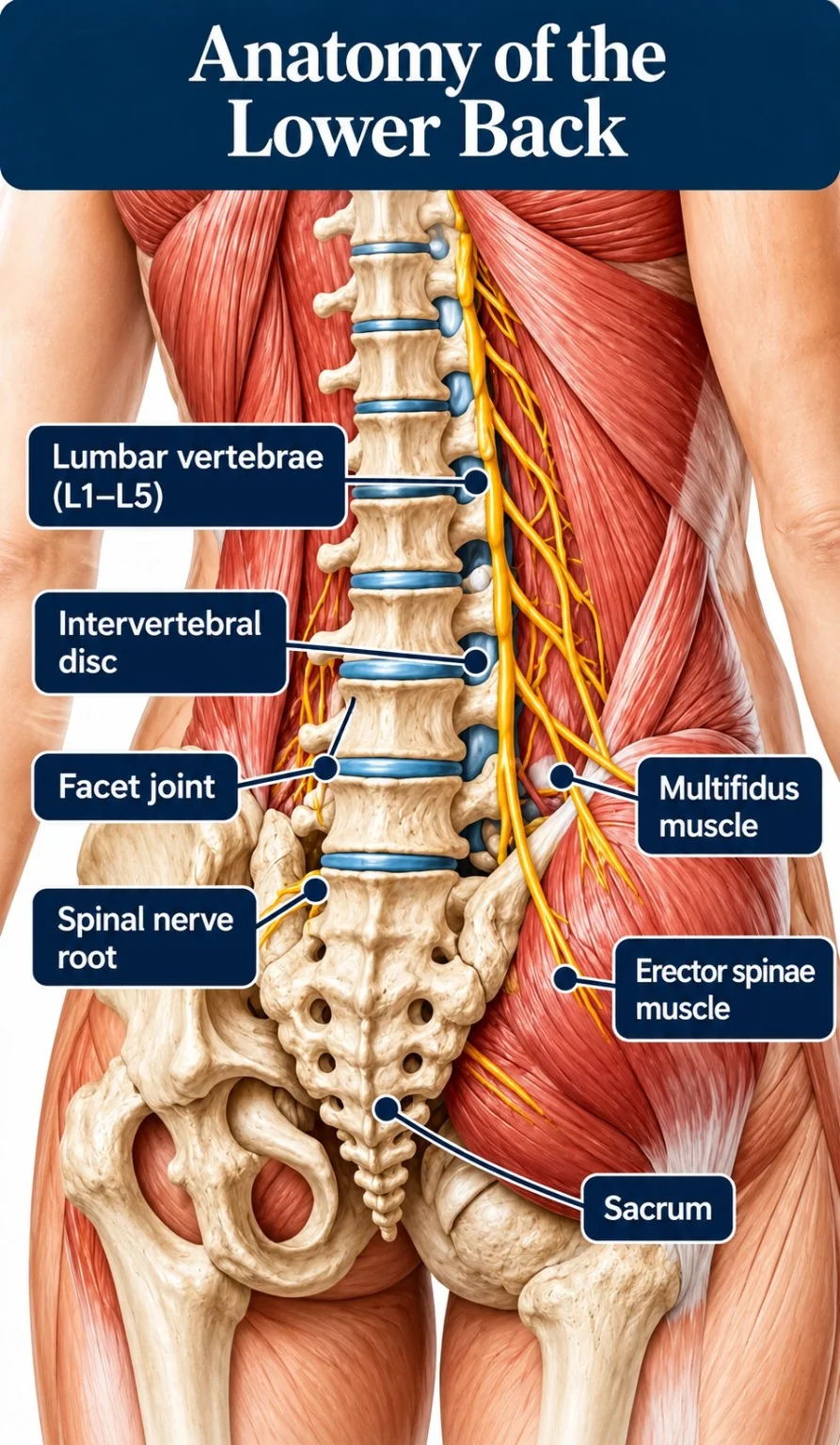
Some people with disc-related symptoms improve with appropriate non-surgical management, which may include physiotherapy. An MRI finding alone does not determine symptom severity or the treatment needed. Physiotherapy cannot guarantee that a disc will return to a particular position or that surgery will never be needed.
What If Your Lower Back Pain Travels Down Your Leg?
Pain travelling from the back into the buttock or leg may be associated with sciatica or another condition. Assessment may consider pain pattern, tingling, numbness, strength and whether further investigation is needed.
Seek emergency medical care for back pain accompanied by new bladder or bowel dysfunction, numbness around the groin or saddle area, or rapidly worsening neurological symptoms.
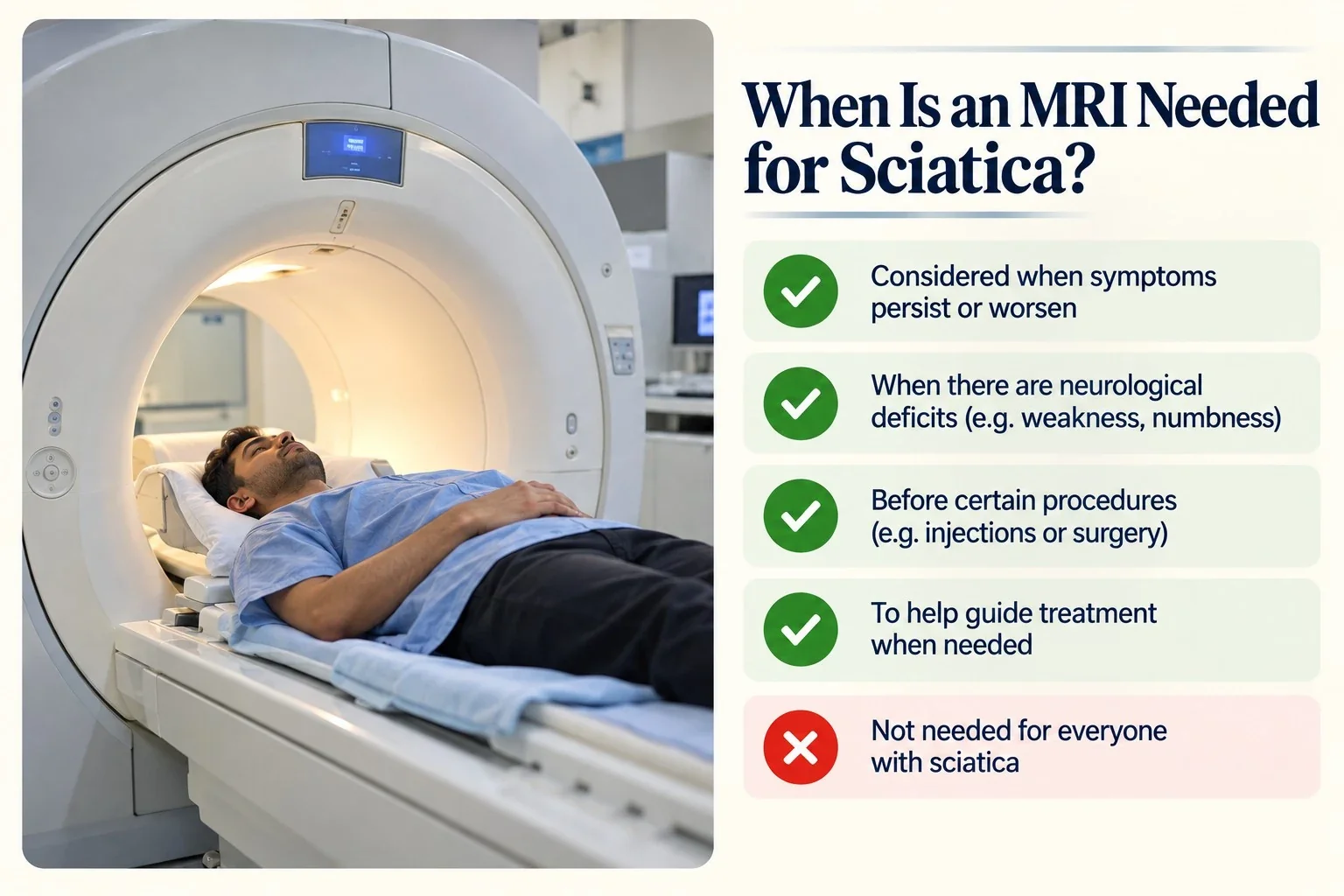
Do You Need an MRI Before Starting Physiotherapy?
Not necessarily. Imaging is not routinely needed for uncomplicated lower back pain. A healthcare professional should consider it when there are specific concerns or when results are likely to change management.
What Can Physiotherapy Involve?
When appropriate, a plan may include movement and functional assessment, individualised exercise, guidance on daily activities, selected manual therapy as part of a broader plan, and progress monitoring. Treatment should be tailored to the person; there is no guaranteed recovery timeline or fixed number of sessions for every case.
What Should You Do Today?
| Situation | Suggested next step |
|---|---|
| Movement-related lower back pain without warning signs | Consider a physiotherapy assessment. |
| Recurrent pain affecting daily activities | Arrange an appropriate clinical assessment. |
| Pain travelling down the leg with tingling or numbness | Seek assessment to determine appropriate care. |
| Significant injury or suspected fracture | Seek prompt medical assessment. |
| New or progressive weakness | Seek urgent medical assessment. |
| New bladder/bowel dysfunction or saddle-area numbness | Seek emergency medical care immediately. |
Physiotherapy for Lower Back Pain in Manikonda, Hyderabad
At Dr Hamid's Physio and Pain Clinic, patients can enquire about physiotherapy assessment for lower back pain and related musculoskeletal concerns. Recommendations should follow clinical assessment, with referral when further medical evaluation is needed.
Contact the Clinic
Enquire about appointment availability.
Frequently Asked Questions
Should I consult an orthopaedician or physiotherapist for lower back pain?
For many uncomplicated, movement-related cases, physiotherapy assessment can be a practical starting point. Specialist assessment may be appropriate when symptoms suggest an injury or a condition requiring investigation. Some people benefit from both.
Can physiotherapy help lower back pain without surgery?
Physiotherapy can help manage suitable cases through individualised exercise, movement guidance and other appropriate interventions.
Does every case of lower back pain require an MRI?
No. Imaging is not routinely needed for every episode of uncomplicated lower back pain.
Can a slipped disc improve with physiotherapy?
Some people improve with non-surgical management, which may include physiotherapy. The approach depends on symptoms and assessment findings.
What if lower back pain travels down my leg?
Seek assessment to identify the likely cause. Emergency warning signs include new bladder or bowel dysfunction, saddle-area numbness or rapidly worsening weakness.
Is rest the best treatment?
Prolonged bed rest is generally not recommended for uncomplicated lower back pain. Appropriate activity and gradual return to normal routines are often encouraged.
Can physiotherapy and orthopaedic care happen together?
Yes. Physiotherapy may complement investigation, medical management or post-operative rehabilitation.
How long does physiotherapy take?
Recovery varies with the cause, symptom duration, health factors, functional limitations and response to treatment.
Should I continue physiotherapy if pain is worsening?
Worsening symptoms should be reassessed. Seek urgent care for serious warning signs.
How can I enquire about a consultation in Manikonda?
Use the Call or WhatsApp buttons above to ask about appointment availability. Seek emergency care rather than waiting for a routine appointment if emergency warning signs are present.
About the Author
Dr. Mohammed Hamid Ali, BPT, MPT (Orthopedics) Professional Registration No.: 0413
References and Further Reading
- NICE. Low back pain and sciatica.
- WHO. Non-surgical management of chronic primary low back pain.
- APTA/JOSPT. Low back pain guideline, 2021.
- American College of Physicians. Noninvasive treatments.
- NHS. Back pain.
- NCCIH. Low-back pain and complementary approaches.
- World Physiotherapy. India member profile.
- WHO. Guidelines on chronic low back pain.
- National Library of Medicine. PubMed.
- Rubinstein SM et al. Spinal manipulation for chronic low back pain.
- NHS. Sciatica.
- NICE. Suspected neurological conditions.
Medical Disclaimer
This article is for general education and does not replace individual clinical assessment or medical advice. Seek emergency medical care for new bladder or bowel dysfunction, saddle-area numbness or rapidly worsening neurological symptoms.
Related reading and clinic information
See the clinic’s back pain physiotherapy service and contact page. You may also find the guide to common causes of lower back pain useful.