
Do you wake up with a stiff neck, pain when turning your head, or discomfort spreading towards your shoulders? Morning neck pain can make simple activities—getting dressed, checking your phone, driving to work, or sitting at your desk—uncomfortable.
In many cases, the discomfort is related to muscle tension, sleeping position, or irritation of the joints and soft tissues around the neck. However, recurring or severe pain can sometimes indicate a condition that needs professional assessment. Awkward sleeping positions, prolonged time in one position, injury, and irritated nerves are recognised contributors to neck pain. NHS: Neck pain
The good news is that mild morning neck stiffness often improves with gentle movement and appropriate self-care. The important thing is to understand what might be causing your symptoms and recognise when you need medical help.

Why does my neck hurt after sleeping?
Your neck supports the weight of your head and allows you to look up, down, and from side to side. During sleep, your head and neck remain in a position for several hours. If that position is uncomfortable for you, or if your neck muscles were already irritated during the day, you may notice pain when you wake up.
There is not always one obvious cause. Your pillow, sleeping habits, daytime activities, stress, and underlying neck problems may all contribute.

7 common causes of neck pain after waking up
1. Sleeping in an uncomfortable position
Sleeping with your head turned sharply to one side or held in an uncomfortable position for a prolonged period may aggravate the muscles and joints around your neck.
What may help: Try a sleeping position that allows your head and neck to rest comfortably in line with your body. Avoid forcing your neck into a position that increases pain.
2. An unsuitable pillow
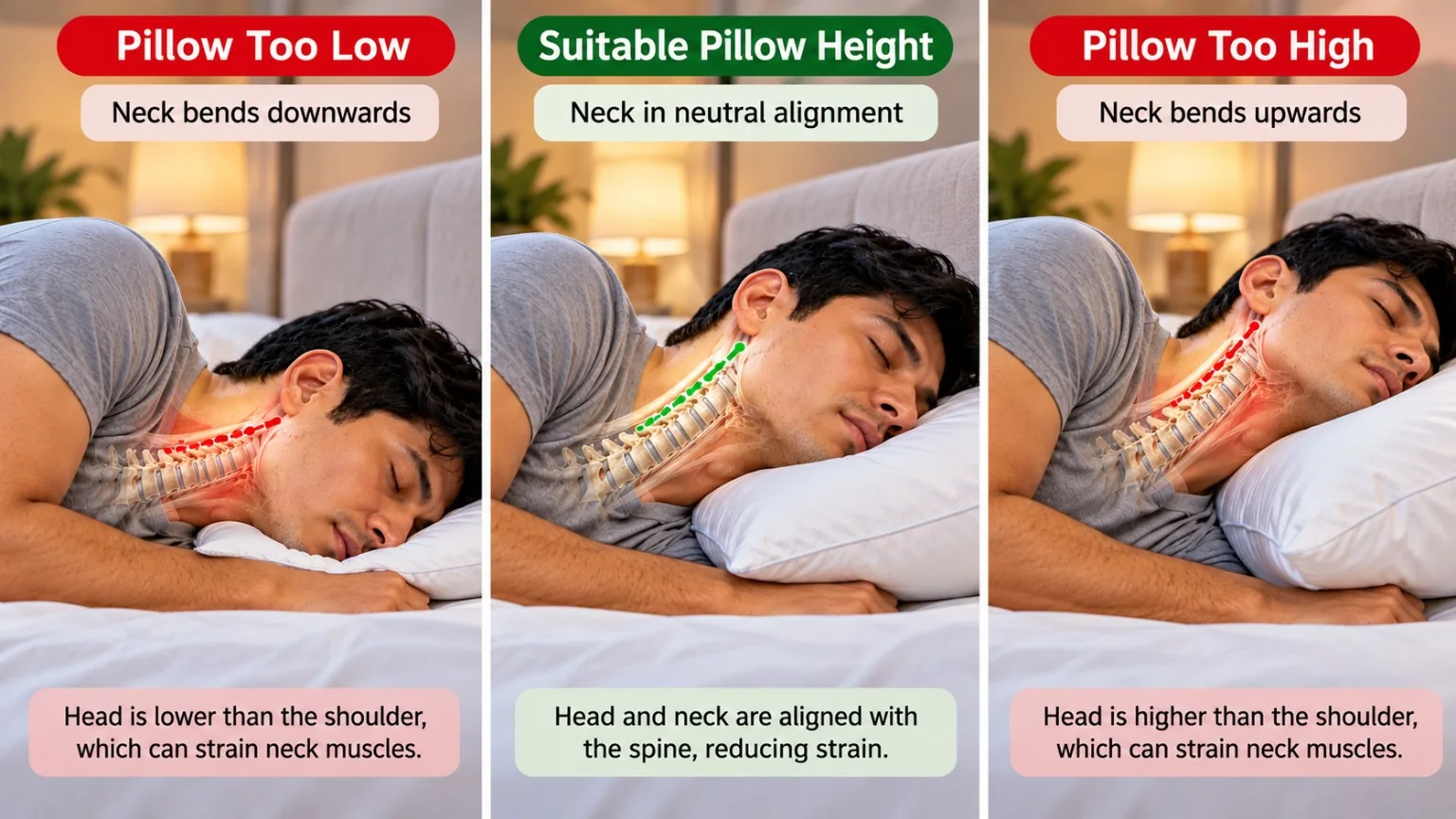
A pillow that is too high, too low, or uncomfortable for your sleeping position may contribute to morning neck discomfort. There is no single pillow height or design that suits everyone.
What may help: Choose a pillow that supports your head without pushing your chin excessively towards your chest or allowing your head to tilt markedly to one side. Review your pillow if you regularly wake up with symptoms.
3. Muscle tension from daytime activities
Long periods of computer work, looking down at a phone, reading, or remaining in one position can place sustained demands on the neck and shoulder muscles. Symptoms may become noticeable the following morning. Regular movement breaks and comfortable workstation adjustments may help.
What may help: Take regular movement breaks, adjust your screen to a comfortable height, and vary your posture throughout the day. No single posture needs to be maintained perfectly all day.

4. Muscle strain or spasm
Muscles around the neck can become irritated after unfamiliar exercise, sudden movements, prolonged positioning, or other physical demands. You may experience tenderness, tightness, and difficulty turning your head.
What may help: Try gentle, comfortable movements and a warm compress. Avoid aggressive stretching, forceful neck manipulation, or movements that sharply increase pain.

5. Stress and poor-quality sleep
Stress can contribute to muscle tension and may influence how strongly you experience pain. If you are sleeping poorly or waking frequently, neck discomfort may also feel harder to manage.
What may help: Maintain a consistent sleep routine, take short relaxation breaks, and include comfortable physical activity in your daily routine.
6. Cervical spondylosis or age-related changes
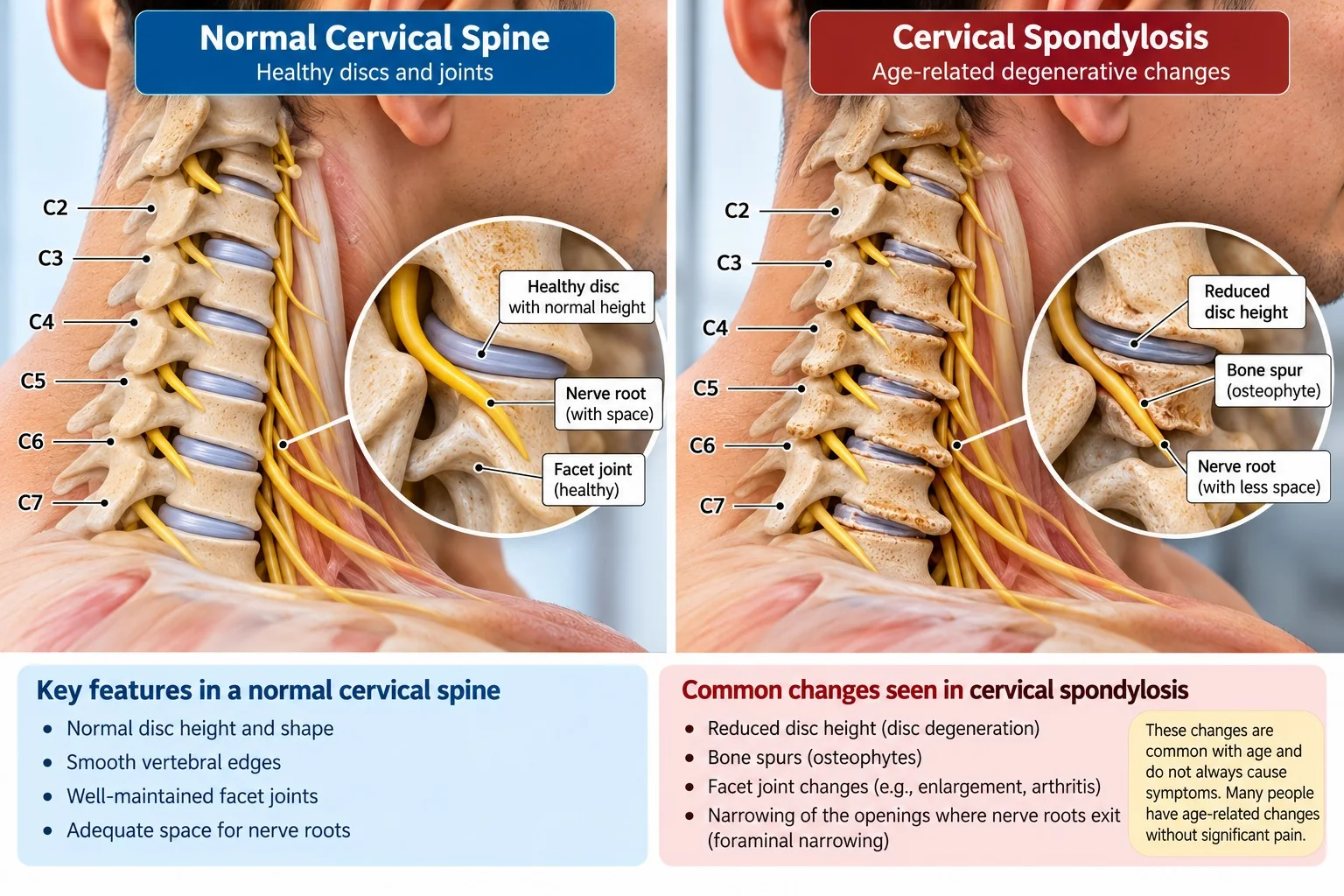
Cervical spondylosis refers to age-related changes in the structures of the neck, including its discs and joints. Some people experience stiffness or pain, while others have these changes without noticeable symptoms. NHS: Cervical spondylosis
Important: Morning neck pain alone does not mean you have cervical spondylosis. A clinical assessment is more useful than assuming the cause from symptoms alone.
7. Irritation or compression of a nerve in the neck
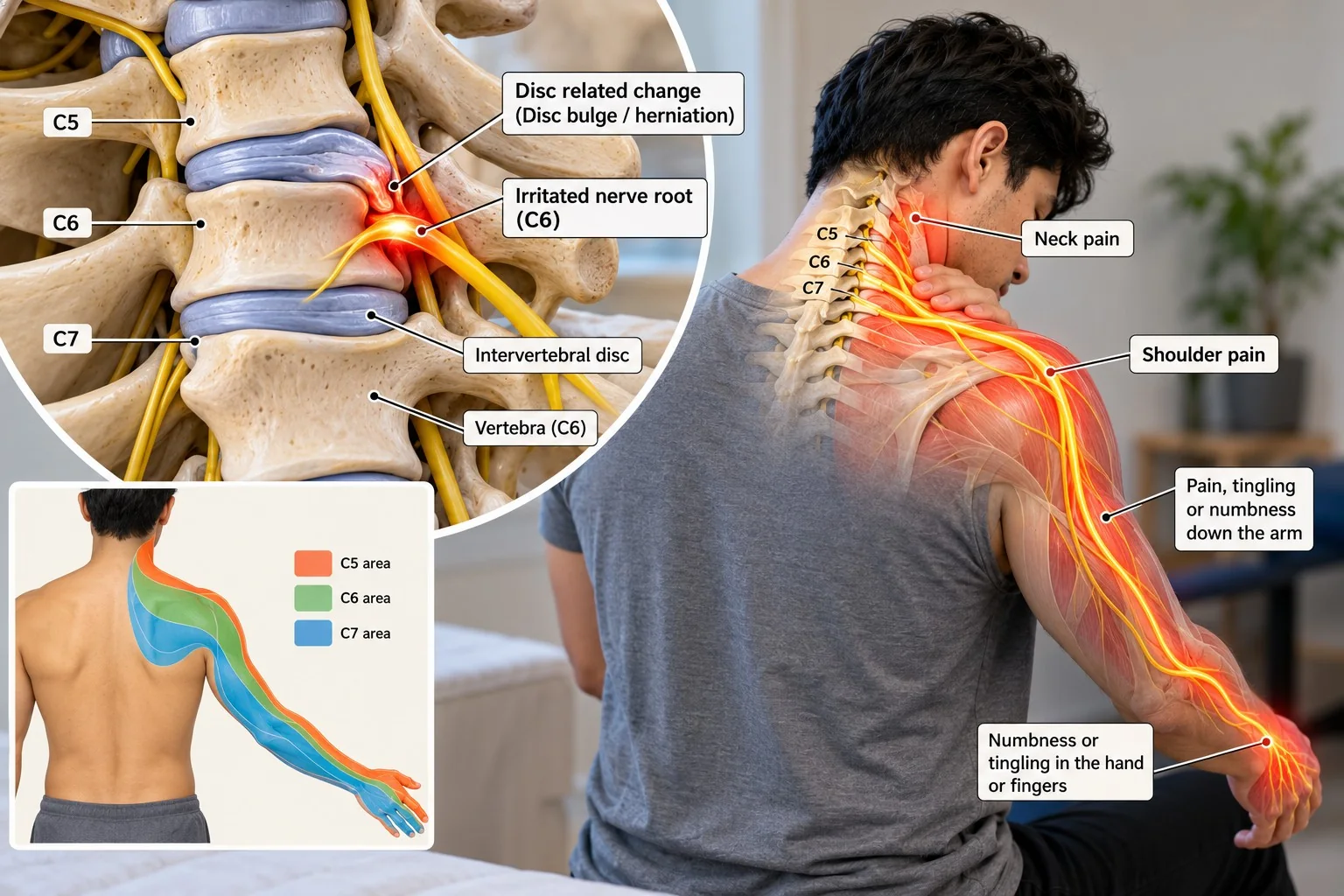
An irritated cervical nerve can cause pain that travels from the neck into the shoulder, arm, or hand. Some people also experience tingling, numbness, or weakness.
What may help: If pain spreads down your arm or you develop persistent tingling, numbness, or weakness, arrange a clinical assessment. New or worsening weakness needs urgent medical attention. NICE: Neurological conditions—recognition and referral
What should you do when you wake up with neck pain?
If the pain is mild and you have no warning signs, start gently. Do not try to force your neck to move normally immediately after waking.
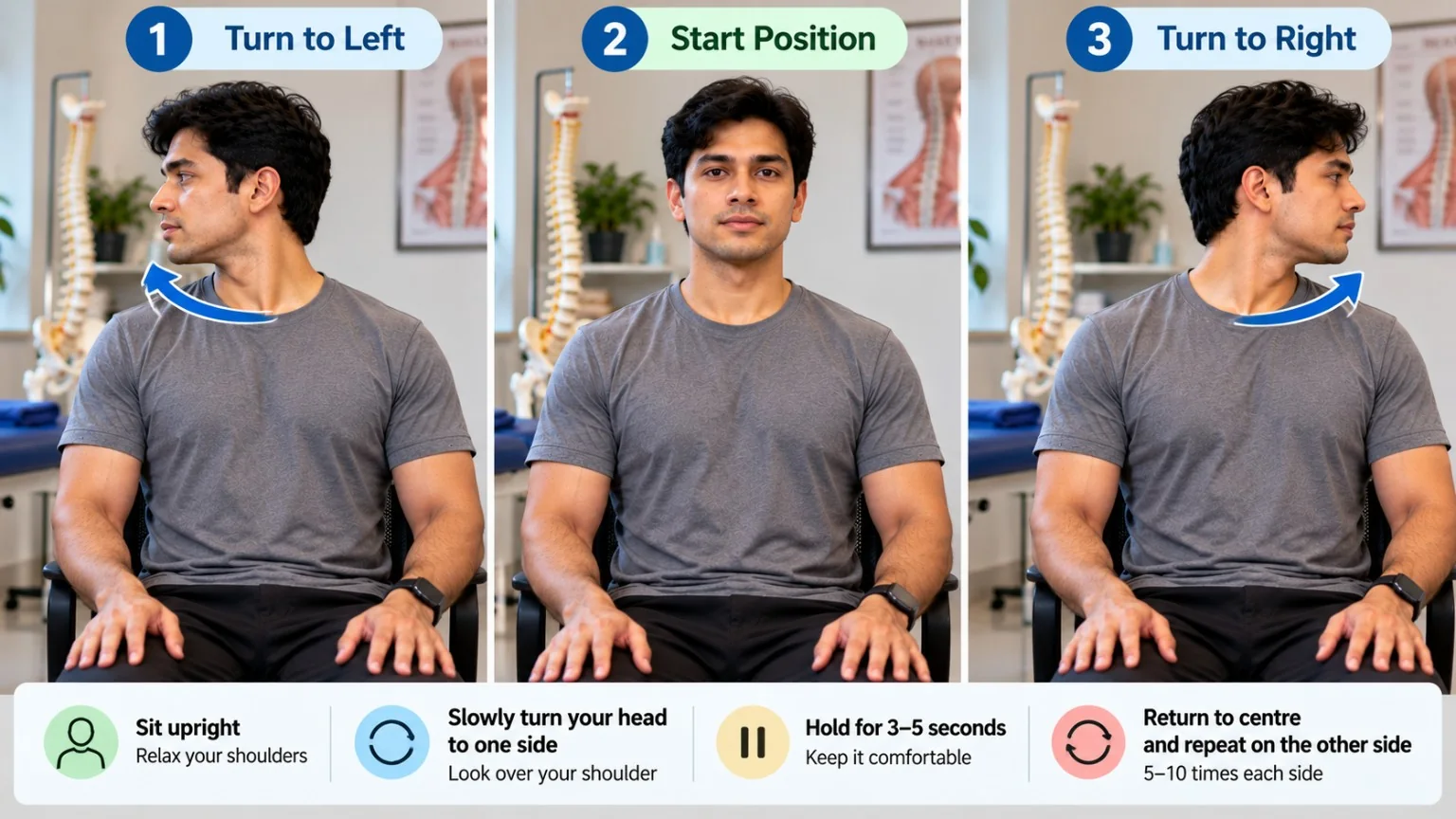
- Move slowly. Turn your head a little from side to side within a comfortable range.
- Try gentle warmth. A comfortably warm compress may help ease muscle tightness. Protect your skin and avoid excessive heat.
- Continue normal activities as tolerated. Short walks and regular movement are usually preferable to remaining still for long periods.
- Avoid forceful stretching. Stop movements that cause sharp pain, dizziness, or symptoms travelling down your arm.
- Review your sleeping setup. Check whether your pillow and sleeping position feel comfortable and supportive.
- Adjust your daytime habits. Take breaks from prolonged phone or computer use.
- Seek assessment if symptoms persist or recur. Repeated morning pain may need a closer look at your neck movement, strength, daily activities, and nerve symptoms.
What is the best sleeping position for neck pain?
There is no universally perfect sleeping position. The goal is to find a comfortable position that supports your head and neck without aggravating symptoms.
- Side sleeping: Use a pillow that fills the space between your shoulder and head comfortably, without tilting your head sharply upwards or downwards.
- Back sleeping: Choose support that keeps your head and neck comfortable and avoids pushing your chin excessively towards your chest.
- Stomach sleeping: This often requires turning the head to one side for a prolonged period, which may aggravate symptoms in some people. Consider trying side or back sleeping if comfortable for you.
You do not need to buy an expensive pillow immediately. Start by checking whether your current pillow provides comfortable support and whether changing your position affects your symptoms. The NHS also advises keeping the head at a similar height to the rest of the body while sleeping. NHS: Neck pain
When should you seek medical attention?
Most uncomplicated neck pain is not an emergency, but some symptoms need prompt assessment.

Seek emergency medical care if neck pain is accompanied by a significant accident or injury, fever with severe neck stiffness and a severe headache or confusion, sudden neurological symptoms, new difficulty walking, or new loss of bladder or bowel control. Seek urgent assessment for new or worsening limb weakness, progressive numbness, or severe or rapidly worsening pain. See NICE guidance on neurological symptoms and NHS guidance on cervical spondylosis.
If your neck pain continues for several weeks, keeps returning, interferes with sleep or daily activities, or is not improving with self-care, arrange an assessment with an appropriate healthcare professional.
How can physiotherapy help with morning neck pain?
Physiotherapy may help when neck pain is related to movement, muscle function, joint stiffness, or difficulties returning to normal activities. Treatment should be based on an individual assessment rather than a standard package of exercises for everyone.
Depending on your findings, your physiotherapist may assess:
- Neck movement and the activities that aggravate your symptoms.
- Neck and shoulder muscle function.
- Whether symptoms spread into your arm or suggest nerve involvement.
- Workstation habits, sleep-related concerns, and daily movement patterns.
- Whether your symptoms require referral for further medical investigation.
A tailored plan may include education, graded movement, appropriate strengthening exercises, activity modification, and strategies to manage recurrence. The treatment plan should change according to your symptoms, progress, and assessment findings.
Clinical-test safety note: Some neck and nerve tests are performed by trained clinicians when appropriate. They are not home tests; do not try to reproduce them yourself.
Neck pain physiotherapy in Manikonda, Hyderabad
If morning neck stiffness is repeatedly affecting your sleep, work, driving, or everyday activities, an individual assessment can help identify possible contributing factors and determine the next steps.
At Dr Hamid’s Physio and Pain Clinic, Manikonda, Hyderabad, patients can enquire about physiotherapy assessment for neck pain and related movement difficulties. Treatment recommendations should follow an appropriate clinical evaluation, with referral when symptoms suggest a condition requiring further medical care.
Appointment enquiry: Visit Dr Hamid’s Physio and Pain Clinic for clinic information and available contact details.
This article is for general education and does not replace an individual diagnosis or medical consultation.
Frequently asked questions
Why does my neck hurt only in the morning?
Possible reasons include an uncomfortable sleeping position, pillow support, muscle tension, or an existing neck problem. The pattern of symptoms and clinical assessment help determine the likely cause.
Can a pillow cause neck pain?
An unsuitable pillow may contribute to discomfort if it leaves your head and neck in an uncomfortable position. The best support depends on your sleeping position and individual comfort.
Should I stretch my neck immediately after waking up?
Gentle, pain-limited movement may help with mild stiffness. Avoid forceful stretching or exercises that cause sharp pain, dizziness, or radiating symptoms.
Is morning neck pain a sign of cervical spondylosis?
Not necessarily. Morning pain alone cannot diagnose cervical spondylosis. A healthcare professional can assess your symptoms and decide whether further investigation is needed.
Why does neck pain travel into my shoulder or arm?
Pain can spread from the neck to nearby areas due to referred pain or irritation of a cervical nerve. Tingling, numbness, or weakness should be assessed rather than self-diagnosed.
Should I use ice or heat for neck stiffness?
Comfortable warmth may help some people with muscle tightness. For a recent injury, the most appropriate approach may differ. Protect your skin, avoid extreme temperatures, and seek advice if symptoms are severe.
When should I see a physiotherapist for neck pain?
Consider an assessment if the pain keeps returning, limits movement, affects your activities, or is not improving. Seek urgent medical care for warning signs such as new weakness, major trauma, or severe neck stiffness with fever.
Can physiotherapy prevent neck pain from returning?
A tailored plan may help improve movement, strength, activity tolerance, and self-management. Outcomes depend on the cause of the pain and individual factors; recurrence cannot always be prevented.
Do I need an X-ray or MRI for morning neck pain?
Not everyone needs imaging. A healthcare professional should decide whether imaging is appropriate based on your history, examination, and any warning signs.
Where can I get neck pain physiotherapy in Manikonda?
You can contact Dr Hamid’s Physio and Pain Clinic in Manikonda, Hyderabad, for information about assessment and appointments. The appropriate care pathway depends on your symptoms and clinical findings.
References and further reading
- NHS — Neck pain and stiff neck
- NHS — Cervical spondylosis
- WHO — Musculoskeletal conditions
- NICE — Suspected neurological conditions: recognition and referral
- NICE — Spinal injury: assessment and initial management
- Cambridge University Hospitals NHS — Neck sprain advice
- Newcastle Hospitals NHS — Neck pain
Related clinic information
Learn more about neck pain physiotherapy, cervical spondylosis physiotherapy, and cervical radiculopathy physiotherapy. Contact the clinic to ask about appointments.